MYSP

Louis Riel School Division

Multi-Year Strategic Plan 2023–2027

Progress, learning, and what comes next

Evidence refreshed August 2026

Introduction

What Are We Creating Together?

In 2023, Louis Riel School Division set out a Multi-Year Strategic Plan with a simple conviction at its centre: schools exist to help students, staff, families, and communities flourish.

The plan is organized around four priorities: Belonging, Mastery, Independence, and Generosity. Twenty-five strategic actions give those priorities concrete shape.

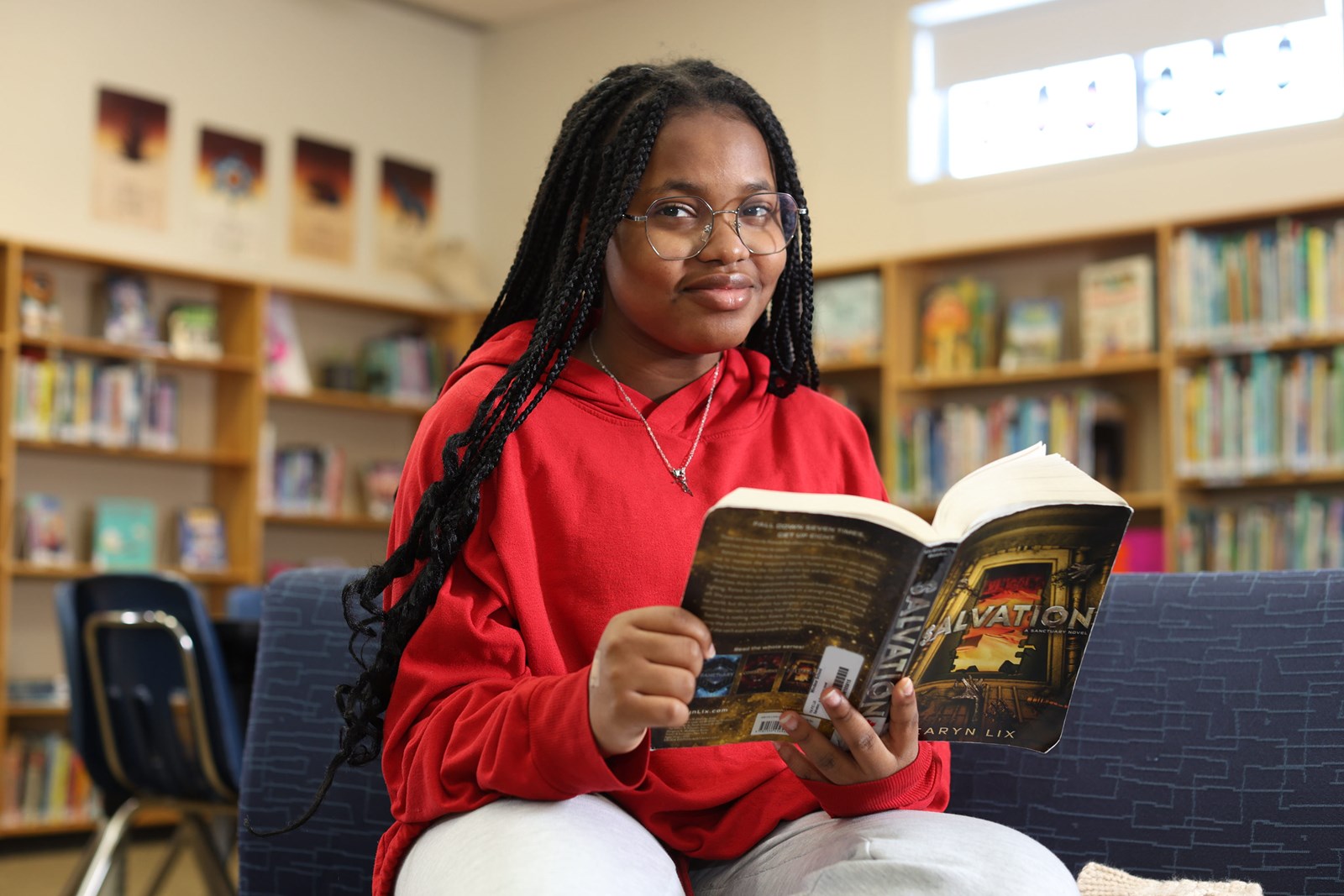
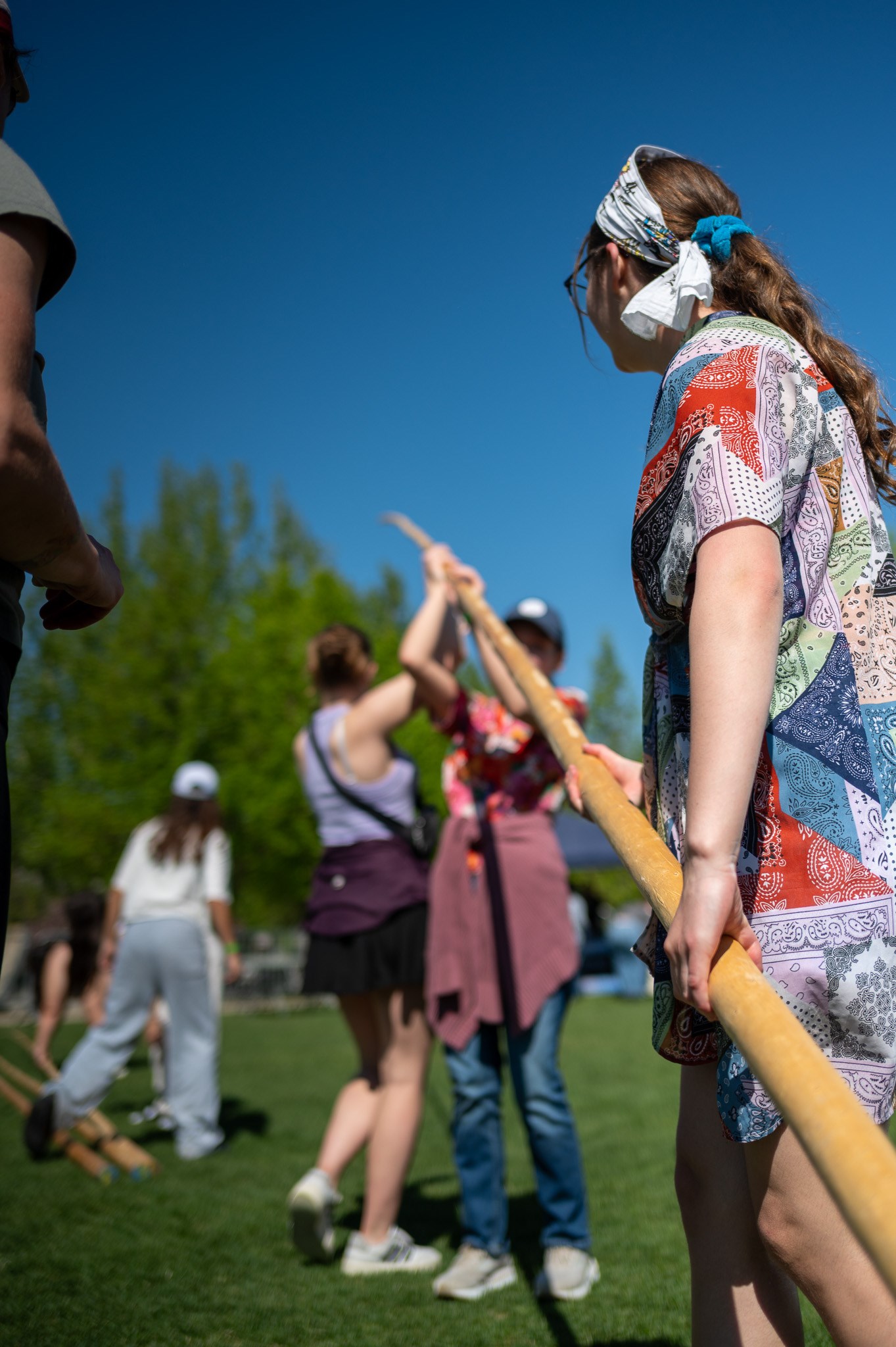
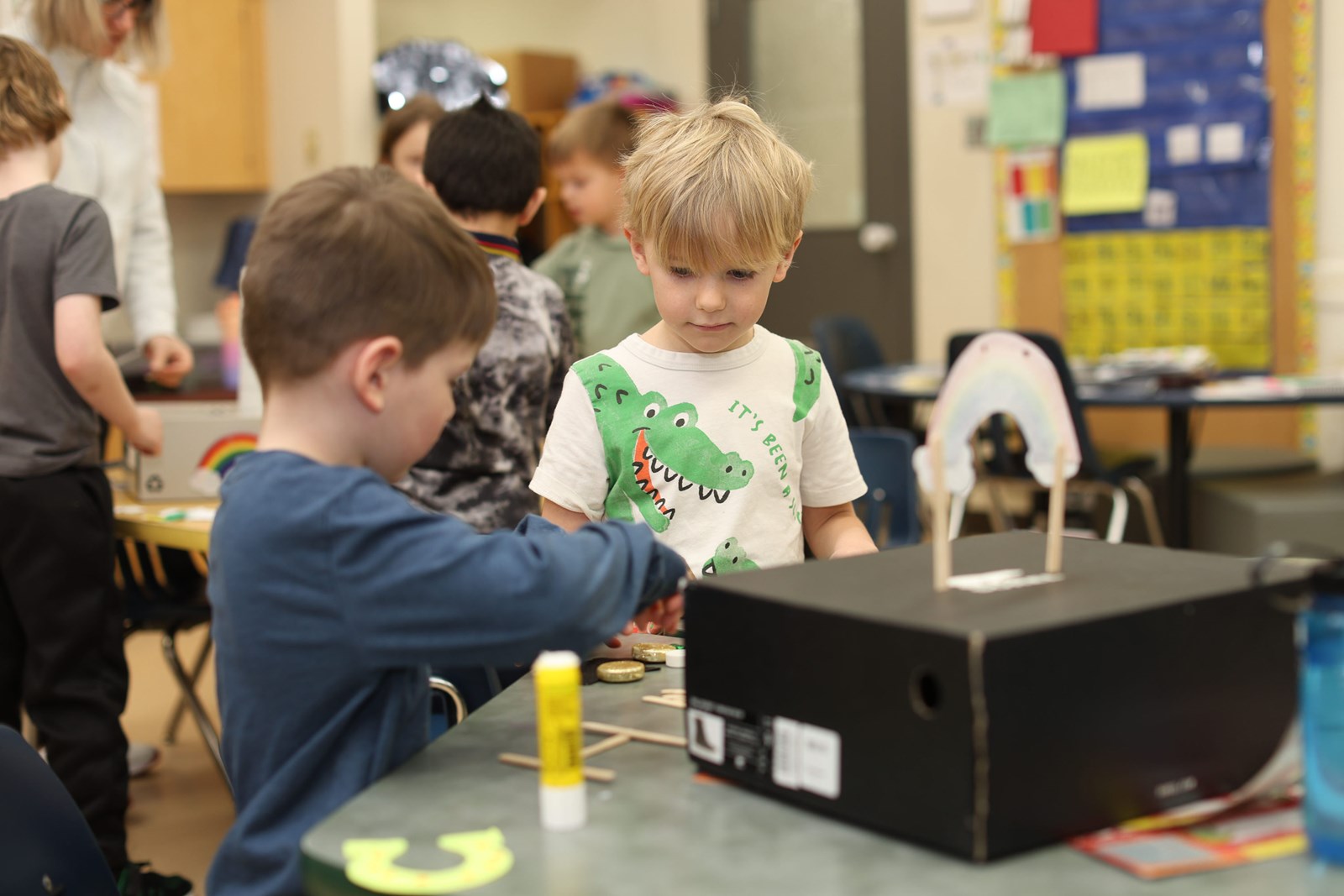
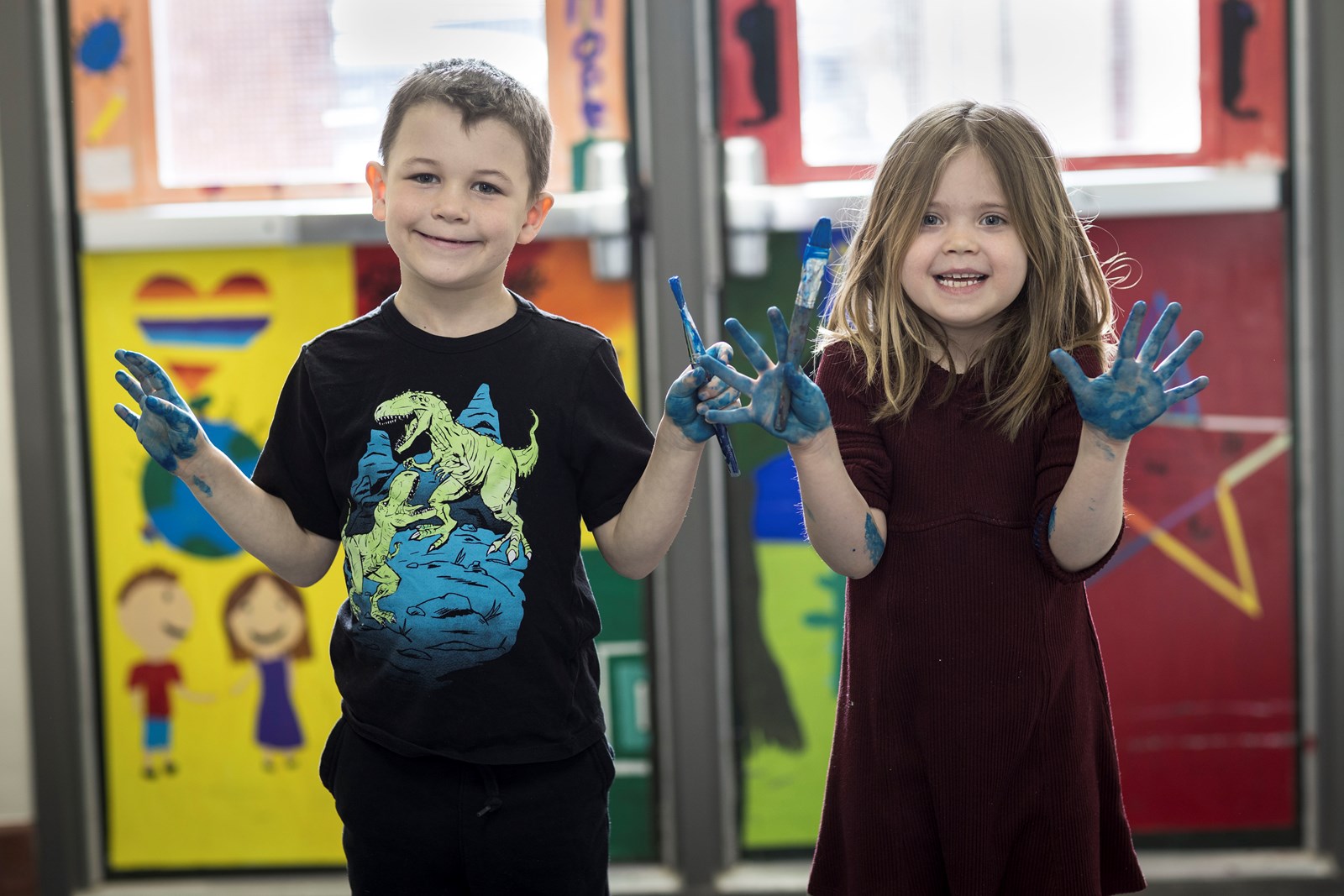
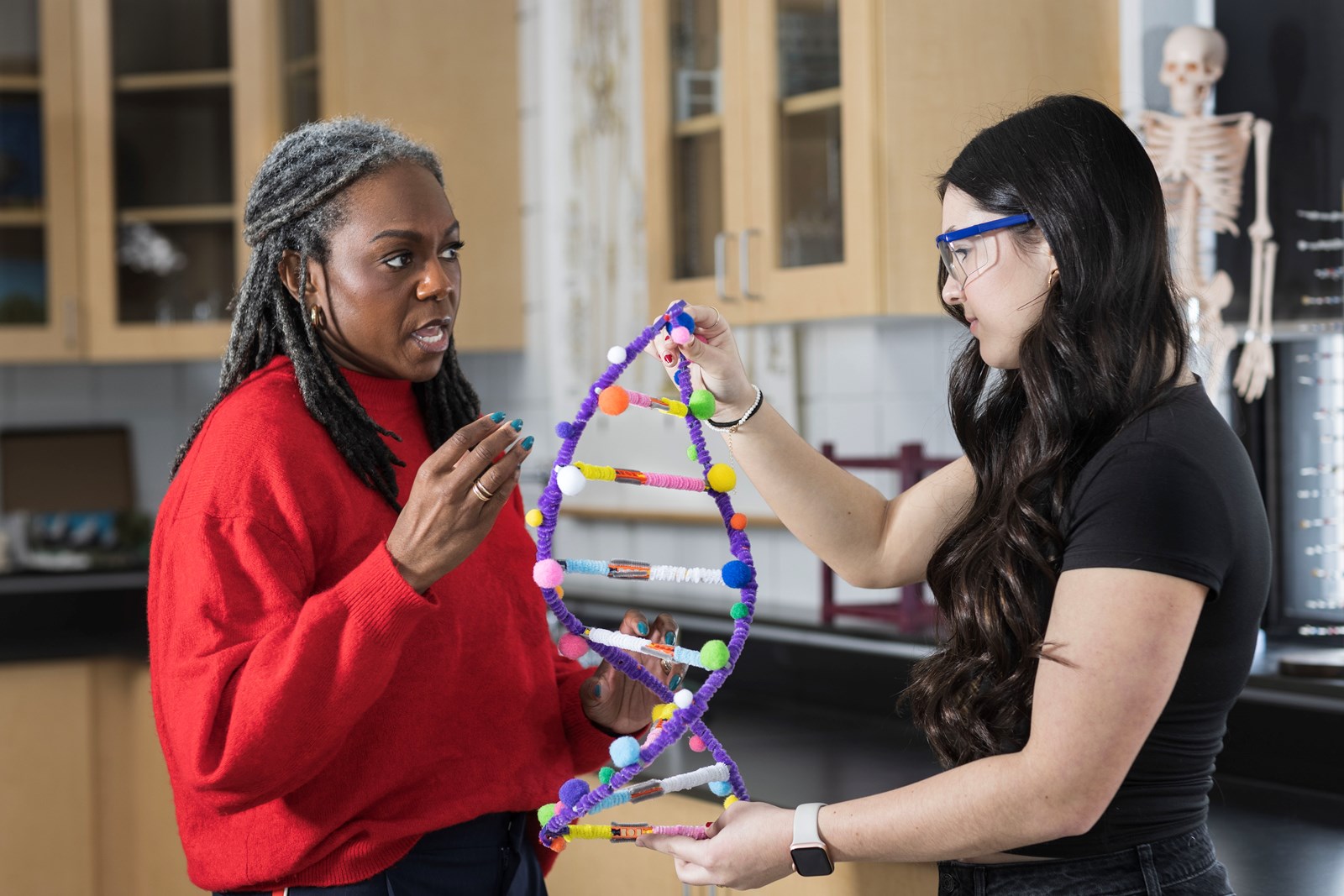
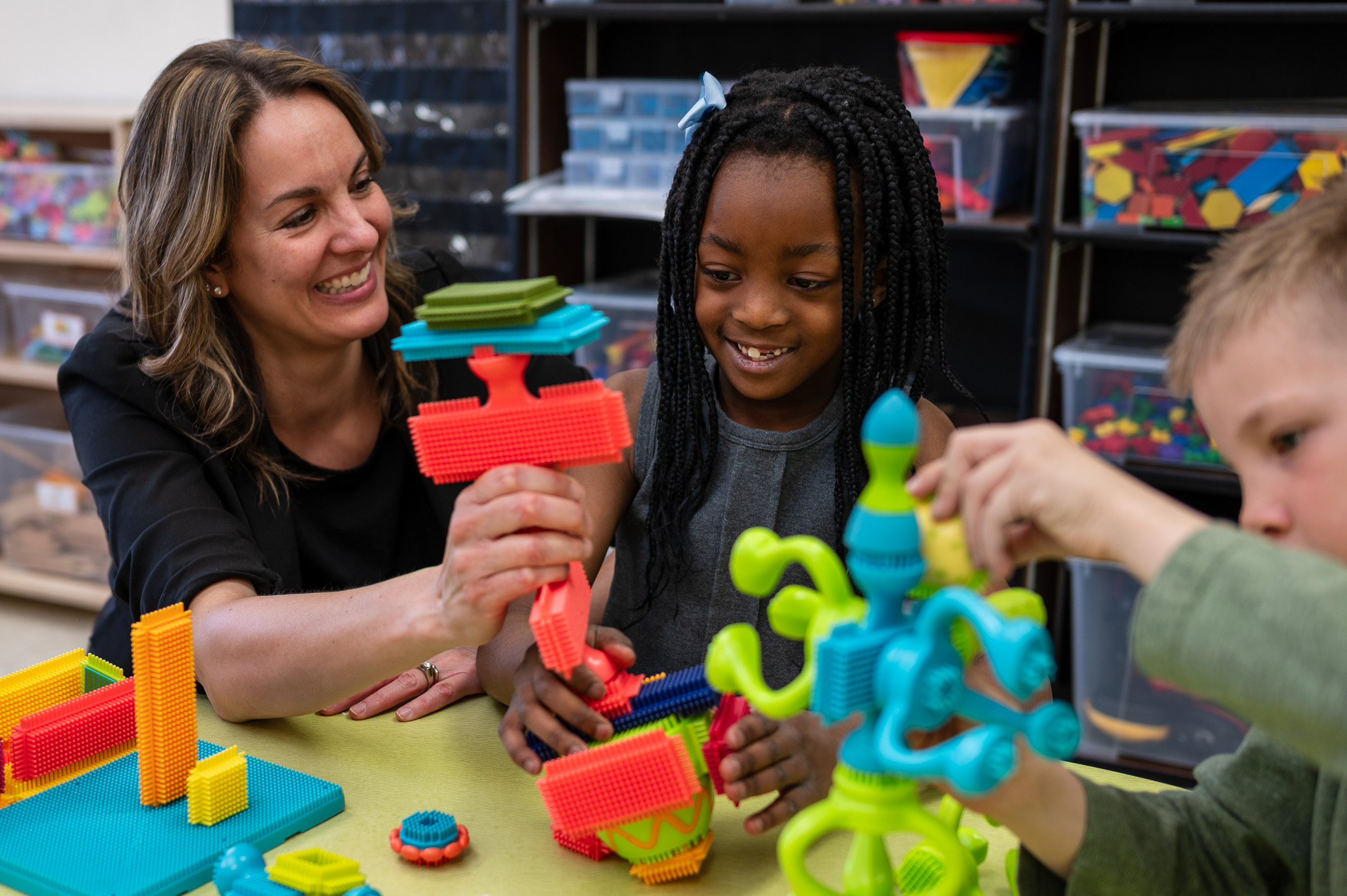
Students and staff at LRSD

The plan did not begin from a blank page. It builds on the foundation of the Multi-Year Strategic Plan 2019–2023, the insights of the Progress Report: Taking Stock of Our MYSP 2019–2023 (March 2023), and three months of community engagement that spring. Taking Stock was not a desk exercise. It drew 7,201 survey responses from students in Grades 5 to 12, roughly 66 per cent of them, 2,013 from staff, roughly 64 per cent including those in casual positions, and 230 from parents and guardians. What they said is why the plan says what it says. It reflects commitments to diversity, equity, inclusion, and accessibility; Indigenous worldviews; co-stewardship; family partnerships; student voice and agency; and data-informed collaboration. The work is informed by Mamàhtawisiwin: The Wonder We Are Born With, the Truth and Reconciliation Commission's Calls to Action 62 to 64 on education, the United Nations Declaration on the Rights of Indigenous Peoples, the United Nations Sustainable Development Goals, UNESCO's ISEE Assessment (2022), and research partnerships with universities and educational partners.

Across all four priorities, the division applies an anti-racist and anti-oppressive lens. This means examining how systems, structures, and practices create barriers, then working intentionally to remove those barriers so that all learners and staff can belong, grow, and thrive.

One finding runs through the whole of this plan and belongs here rather than at the end of it. The gap between Indigenous and non-Indigenous students in achievement, attendance, and self-reported wellbeing is persistent and, in some cases, widening, even as division-wide averages improve. The next plan has to be built around closing it.

This living record is how we report on that work. It is not a scoreboard. It is a record of what has changed, what we are learning, and what still needs attention. Some sections are deliberately left open. Where we do not yet have something to report, we say so, and we name the work of completing the picture.

Two things sit at the bottom of this page and are worth knowing about before you start. Words We Use explains the school vocabulary that appears here. Tell Us What You Think is how to tell us we have got something wrong.

The Plan

What we intended to do. The plan itself, and the plan it grew out of.

Annual Reports to the Community

These reports document what the division knew, celebrated, and wrestled with at different points in the MYSP journey.

Publication note: the 2025–26 Annual Report to the Community will be linked here when it is published.

The Living Record

How we currently understand the work. This page is not another document. It is the current, continuously maintained interpretation of the plan.

Each action is described using three developmental stages:

Emerging

A promise made. The commitment is public and the first work is underway, but too few students would notice it yet. It lives in plans, pilots, and beginnings.

Developing

A promise being kept, in some places more than others. Some students experience this consistently; for others it depends on where they are.

Embedded

A promise woven into everyday practice. The work is load-bearing: stopping it would mean dismantling something. The question now is depth, and who is still left out.

Actions move in both directions. Two moved back a stage in 2026 because the evidence did not support where they sat.

Some actions serve staff or divisional systems rather than classrooms, and the student test does not fit them. For those, the same question is asked of a different person: would a staff member experience their daily work differently because of this?

Back to top ↑

Signs of Change

What Has Changed Since 2023?

Before the action-by-action detail, here are nine signs of change that students, staff, families, and communities can see. These nine were chosen on one test: a student, a family or a staff member can see or feel them without reading a document. Each one is traceable to the strategic actions below.

Kindergarten and BLAST

2023

Full-day Kindergarten operated in only select schools, so many families had to arrange and coordinate coverage for the other half of the day themselves. Where licensed childcare providers were unavailable or could not meet demand, before- and after-school programs were put together school by school, carried by administrators and clerical staff.

2026

Full-Day, Every-Day Kindergarten runs in all 31 LRSD schools that offer Kindergarten, and 71 per cent of the first cohort's Grade 1 teachers saw a positive overall impact. BLAST is now coordinated centrally, running in seven locations serving eight schools, with over 200 students enrolled and more than 250 waiting. An additional location serving two schools opens in September 2026.

These two commitments were taken up in sequence. Full-day Kindergarten in every school closed the half-day gap families had been covering themselves, which brought the next one into focus: a 2025 survey of 2,936 families found more than 1,200 with unmet supervision needs before and after the bell. That demand runs past what licensed childcare providers have capacity to absorb, so the division centralized the effort where the need is greatest. Licensed childcare providers remain essential partners, and reaching half of LRSD communities by January 2027 depends on working with them.

Action 4.3

Nutrition

2023

School nutrition depended on school-by-school effort and fundraising.

2026

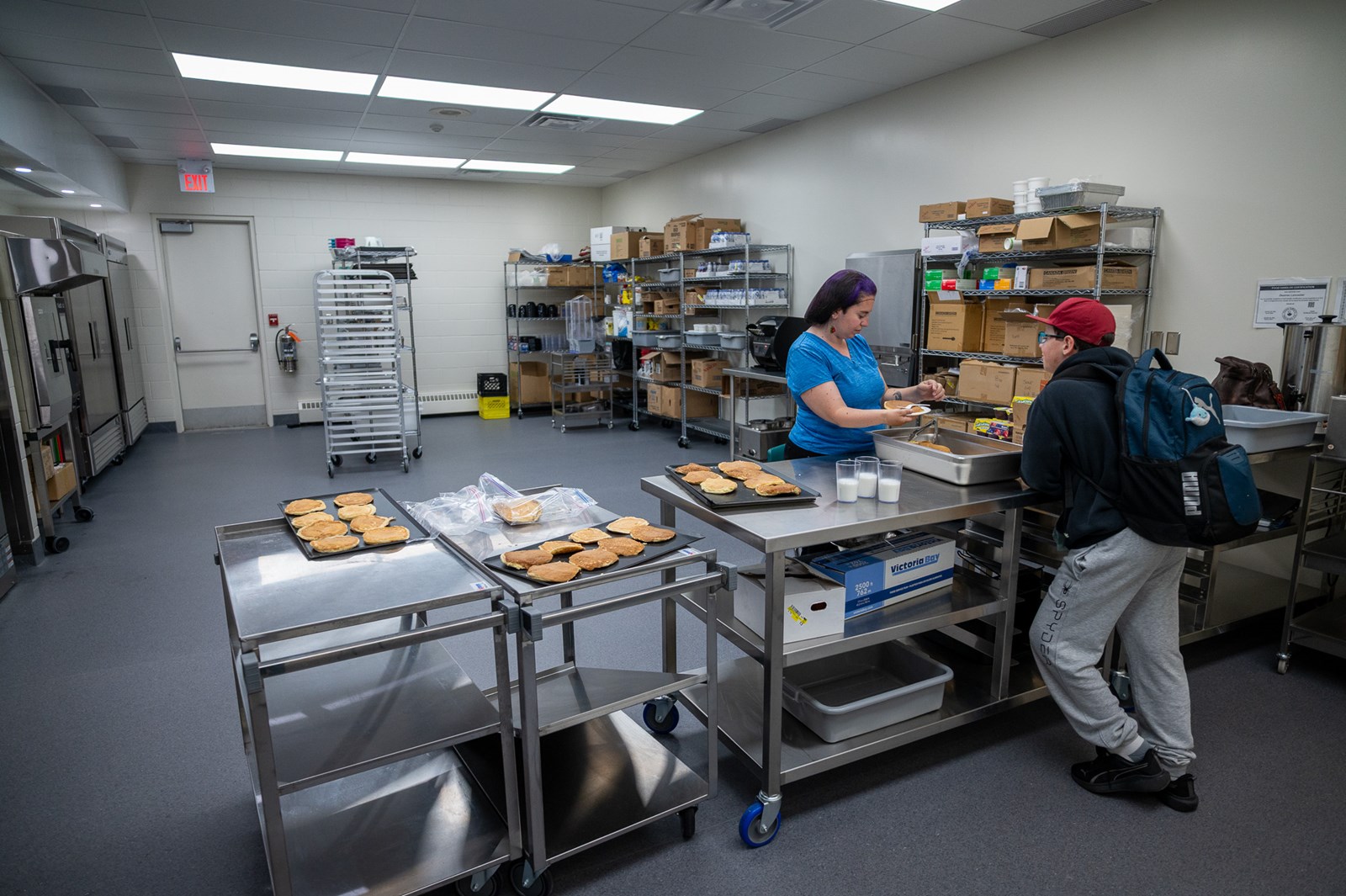
The Universal Nutrition Program runs from a commissary kitchen at the René Deleurme Centre. Orders grew more than 375 per cent in the first implementation phase and are still climbing year over year.

The program is open to every student, so taking a meal is simply part of the school day. No form, no threshold, no one deciding who qualifies. That is what makes it ordinary, and ordinary is what makes it work. Kitchen capacity has set the pace of expansion, and that capacity is being built.

The order matters. LRSD committed to a universal nutrition program in its 2023 plan and had the commissary kitchen under way before the funding to run it existed. Manitoba introduced its own universal school nutrition program in September 2024, backed by $30 million a year, and budgeted $1,594,000 for this division in 2026–27. That funding did not start the work. It brought a commitment the division had already made to fruition.

Action 4.4

Buildings

2023

A second school for the southeast had been requested since 2013, and the community's first school had opened over capacity in 2017. Eleven schools had no air conditioning, a locally funded retrofit begun in 2015 having stalled after five.

2026

The new school opened in September 2025, on the schedule set when its design was authorized three years earlier. A six-year plan to retrofit ten schools with air conditioning is under way, funded locally, and controlled entry systems are being installed division-wide.

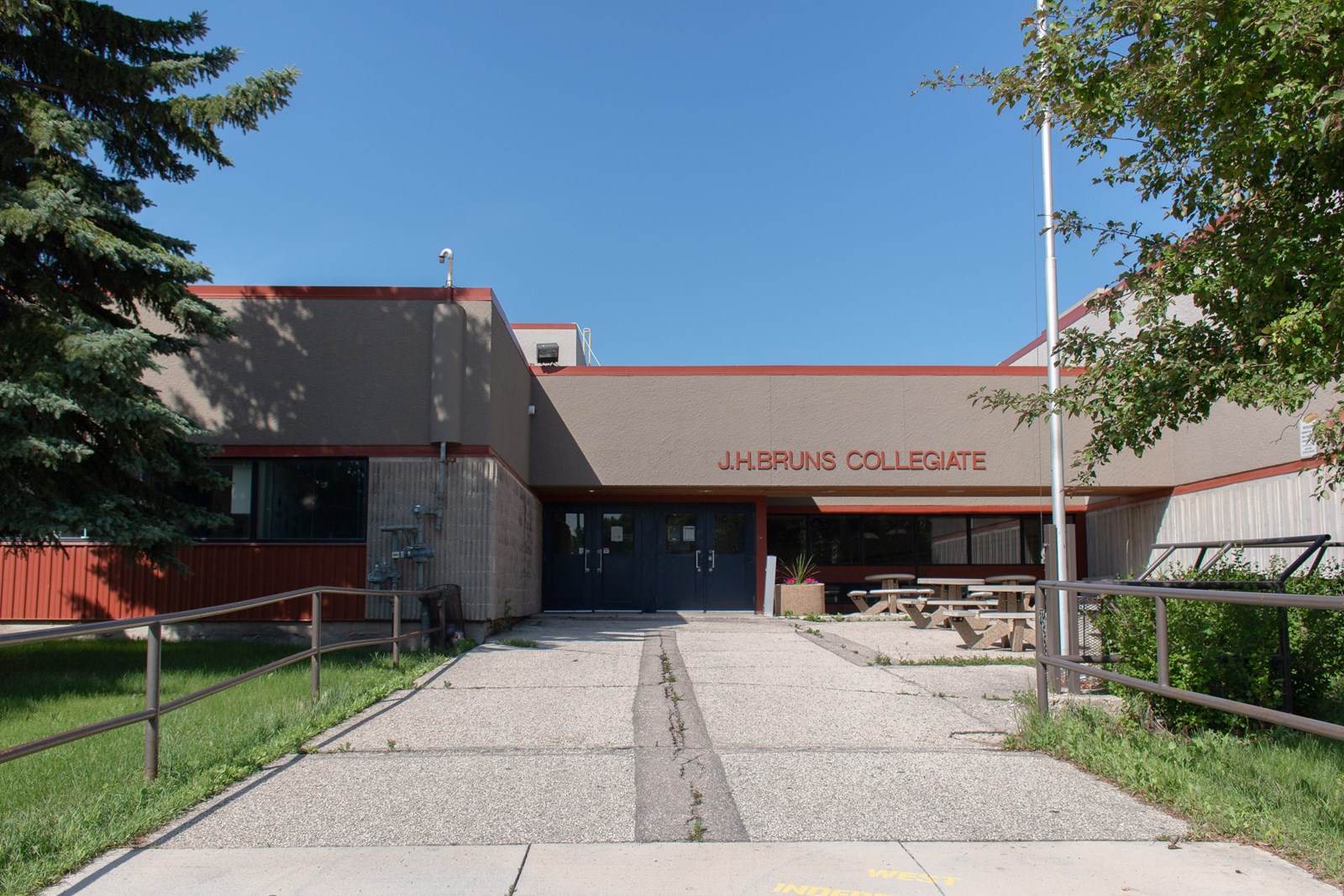
None of this arrived on its own. The new school took twelve years from first request to opening, and assertive, unrelenting advocacy at the end, when approval of the final tender stalled with the building half up. Air conditioning and controlled access are being paid for locally. LRSD 2034 now sets the ten-year infrastructure ask in priority order, and the Annual School Building Review Dashboard publishes the condition of every school. The division cannot build faster than the Province funds. It can say plainly what it needs, in what order, and why.

Action 4.1

Early Screening

2023

Early identification of learning needs varied from school to school.

2026

Universal literacy screening runs in Kindergarten and Grade 1, progress monitoring continues to Grade 8, and numeracy screening runs to Grade 4, in both the English and French Immersion programs.

Prevention now starts with the same information for every child. That is the gain, and it carries a risk worth naming: a screen given to everyone can quietly become a way of sorting them. A result below benchmark tells a teacher where to look next. It is not a verdict on a child, and keeping it from becoming one is part of the work.

Action 2.3

French Immersion

2023

Middle Immersion ran in two schools, École Julie-Riel in the south and École Henri-Bergeron in the north. There was no Late Immersion pathway.

2026

Middle Immersion runs in three schools. A program opened in September 2025 at École Mazina-Giizhik, which welcomed 815 students from Kindergarten to Grade 8 in its first year, and Late Immersion opened the same month at École Van Belleghem. The first cohort in each program finished the year using French confidently.

Manitoba recognizes three entry points into French Immersion, and few divisions offer more than the earliest. LRSD now offers all three. Offering all three entry points broadens who can begin French Immersion. Sustaining students through to graduation is the division's next responsibility, and that question comes into focus as the first cohorts join the regular stream in Grades 7 and 9, respectively.

Action 2.5

Indigenous Learning

2023

Access to Indigenous language classes, land-based learning, and Indigenous ways of knowing varied from school to school.

2026

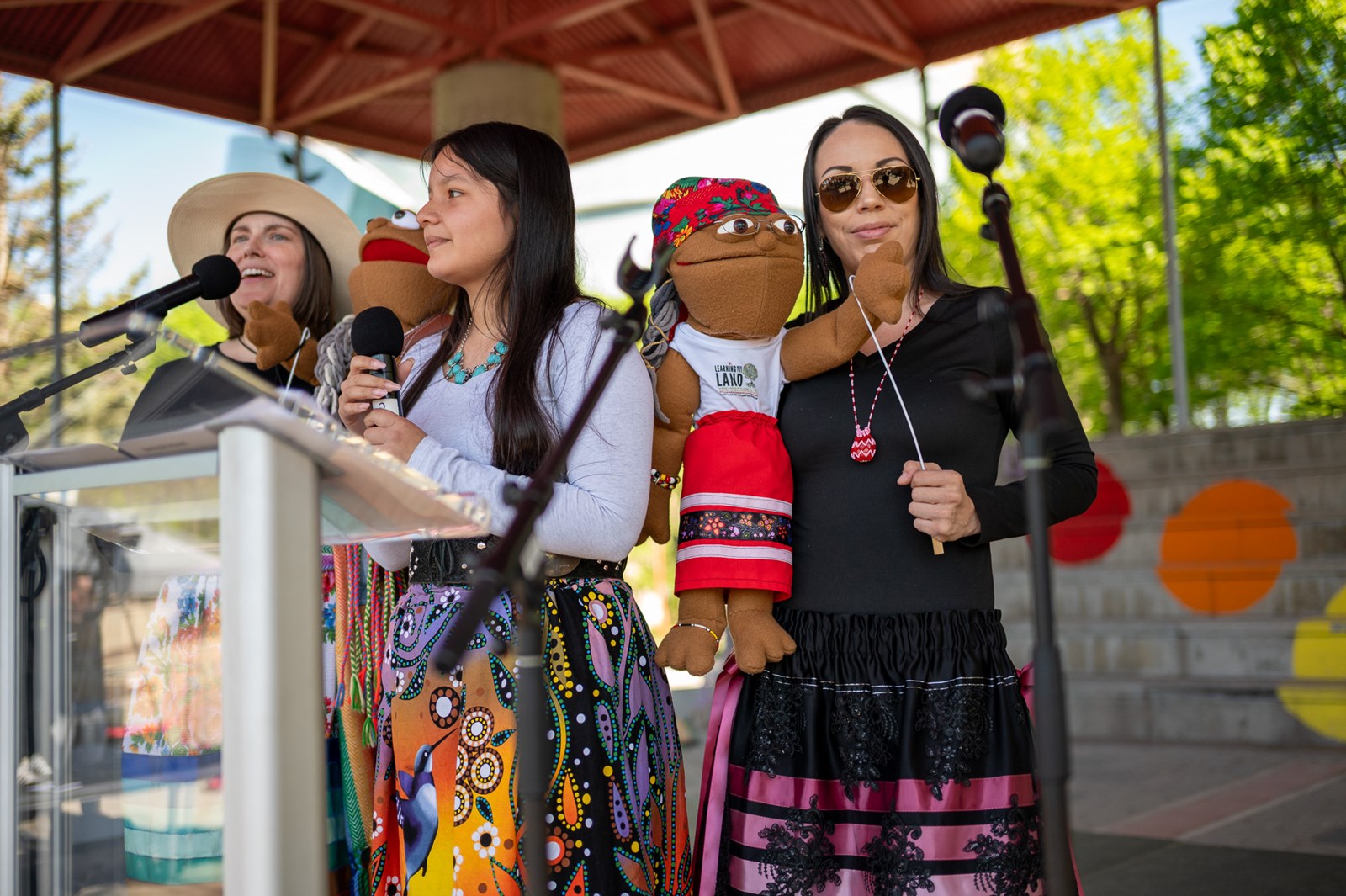
Every student from Kindergarten to Grade 2 now receives Indigenous language exposure through a universal program, expanding to include Cree and Michif alongside Ojibwe. Grades 9 to 12 language options are growing, and land-based inquiry and Treaty learning are more visible across schools. In October 2025, the whole division set aside a day for Treaty education, with staff gathered at the RBC Convention Centre in the morning and back in their schools for the afternoon.

Language carries culture, identity, and ways of understanding the world. Expanding Indigenous language, land-based, and Treaty learning is how reconciliation becomes something students live, not only something adults discuss. This expansion is substantial, and there remains meaningful distance between where the division is now and what the commitment asks of it.

Action 1.4

Student Wellbeing

2023

Anxiety and depression among students had climbed for years, here as everywhere.

2026

In the Spring 2025 OurSchool survey, student anxiety (25 per cent) and depression (22 per cent) reached eight-year lows. Positive relationships sat at 81 per cent.

Correlation is not proof, and the average is not the whole truth: the gaps between Indigenous and non-Indigenous students in achievement, attendance, and self-reported anxiety and depression are persistent and, in some cases, widening. Both facts belong in this story.

Action 2.4

Responding to Distress

2023

How schools responded to students in distress varied school by school, strategy by strategy.

2026

TCIS is now the single trauma-responsive standard across all 41 schools, delivered by an internal network of 44 trainers drawn from clinicians, student services teachers and administrators. All leaders and clinicians, all educational assistants and student services teachers, and all classroom teachers have received training.

Staff across the division now share a common language and approach for the most difficult moments of the school day. Trained everywhere and practised everywhere are different milestones, and only the first one is finished.

Action 1.3

Staff Wellbeing

2023

The division had no systematic evidence about the working conditions of its own staff.

2026

More than 2,000 staff completed the Guarding Minds at Work survey, and 17 schools have since run their own collaborative wellbeing processes built on that baseline. A focused piece of that work with the School and Classroom Support Team gathered input from 60 of its staff, delivered a first set of actions, and passed longer-term priorities to the incoming leadership team.

Student wellbeing depends on the conditions in which staff work. The division now has a divisional baseline for those conditions. Schools and divisional staff are using it to shape their own wellbeing processes.

Action 1.2

Back to top ↑

System-Wide Reflection

What We Are Learning

Individual actions tell individual stories. Read together, they reveal patterns. Eight stand out.

Removing the eligibility test is what changes who comes forward.

Universal design does more than widen eligibility. Universal full-day Kindergarten, universal nutrition, universal screening, and BLAST all demonstrate the same pattern. Designing for everyone removes the step of determining who qualifies, along with the judgement that step can carry, and it opens participation to families who would not otherwise have come forward. The division's task then becomes making sure everyone can take part, rather than identifying who is eligible.

Drawn from: Actions 2.3, 4.3, 4.4

Supporting students begins with supporting staff.

Student learning and wellbeing are closely connected to the learning, wellbeing, and confidence of the adults around them. Across staff wellbeing, employment equity, responsive and appropriate supports, screening practices, transitions planning, trauma-responsive practice, and social-emotional learning, the same lesson emerges: adults cannot consistently provide what they have not had the opportunity to learn, experience, and practice themselves. Building staff capacity is not separate from improving student outcomes. It is one of the primary ways those outcomes improve.

Drawn from: Actions 1.2, 1.3, 1.5, 2.1, 2.2, 2.3, 2.4, 3.4, 4.6

Good ideas need systems behind them.

Many initiatives begin with vision, energy, and commitment. Lasting change, however, depends on the structures, processes, tools, and shared practices that allow the work to continue and grow over time. Progress in areas such as employment equity, responsive and appropriate supports, universal screening, social-emotional learning, data stewardship, pathways planning, and nutrition demonstrates the importance of building strong foundations. Sustainable improvement depends on both innovation and infrastructure. Nutrition is the plainest case: the promise to feed any student who wants a meal could not scale until there was a commissary kitchen at the René Deleurme Centre to cook in.

Drawn from: Actions 1.5, 2.2, 2.3, 2.4, 3.3, 3.4, 3.6, 4.4, 4.6

Change takes time to become everyday practice.

New ideas can be widely supported and still not yet be part of daily routines. Across staff wellbeing, trauma-responsive schools, employment equity, responsive and appropriate supports, social-emotional learning, screening, data stewardship, and learning with the land, the same lesson appears: adopting something is not the same as embedding it. Most of the work of improvement happens between implementation and permanence, after a decision has been made and before it has become ordinary practice, and it includes building the means to measure whether the change is having its intended impact.

Drawn from: Actions 1.2, 1.3, 1.5, 2.2, 2.3, 2.4, 3.3, 4.5, 4.6

The work that reached furthest is work the division could not have done alone.

Many of the most significant changes in this plan came from partnerships rather than from programs. Families, students, staff, community organizations, Elders, Knowledge Keepers, volunteers, university partners, and public agencies each supplied something the division did not hold on its own: knowledge, standing in a community, or simply the hands to do the work. Whether the work focused on wellbeing, inclusion, active transportation, or learning with the land, it depended on people outside the organization choosing to carry it too. Universities are part of that picture. Early screening has developed over time and continues to evolve through close partnerships with researchers at the University of Toronto's Ontario Institute for Studies in Education, on literacy, and at Carleton University, on numeracy. The trauma-responsive model the division adopted comes from Cornell University, and the feasibility work on a certification pathway for French-speaking educational assistants was carried out with Université de Saint-Boniface and the Bureau de l'éducation française.

Drawn from: Actions 1.1, 1.2, 2.2, 2.4, 4.2, 4.4, 4.5

People sustain what they help create.

Many of LRSD's most significant innovations have been developed by staff working and learning together. Internal trauma-responsive training, universal screening processes, a framework for resource allocation and programming to support student inclusion and diverse needs, data stewardship practices, nutrition expansion, BLAST, and learning-with-the-land initiatives all reflect a consistent pattern of local design and collective problem-solving. When people help create a solution, they are more likely to understand it, improve it, and sustain it over time. Trauma-responsive practice shows it most plainly: forty-four staff now train their own colleagues, so the approach no longer depends on anyone being brought in from outside to teach it.

Drawn from: Actions 1.3, 1.5, 2.3, 2.4, 3.3, 4.3, 4.4, 4.5

A practice can be established well before its effect can be measured.

A practice can be fully established before the means of checking it exist. Employment equity is the clearest case: bias-in-hiring training, standardized interview questions, and revised hiring protocols are all in place, while ethnocultural information is not yet collected through employee profiles or applications, so the division cannot yet say whether its workforce is coming to reflect the students it serves. Screening shows a gentler version of the same pattern: the instruments and the reporting exist, and what remains is the school-based routine that turns a result into a change in teaching that improves learning outcomes. Building the measure alongside the practice is what allows a promise to be verified rather than only described.

Drawn from: Actions 2.3, 4.6

Progress matters, but not everyone is benefiting equally.

Division-wide results show encouraging progress in many areas of student learning and wellbeing. However, Indigenous students continue to experience lower achievement, lower attendance, and less positive wellbeing outcomes than non-Indigenous students. Improving overall results is important, but it is not enough. An honest account of this plan holds both facts at once, and the next plan must be built around closing that gap, not around the averages.

Drawn from: division-wide disaggregated data, Annual Report on Continuous Improvement, November 2025

One question sits underneath all eight of these patterns. The gap between Indigenous and non-Indigenous students remains persistent and, in some cases, continues to widen while division-wide averages improve. The division does not read that as an unexplained result. It is what colonial systems produce when they are left to operate as they were built to operate, and it is why this plan applies an anti-racist and anti-oppressive lens rather than treating the gap as a question of programming alone. Honouring Treaty requires dismantling those systems, not only working around them, and the division said so to all staff at its division-wide Treaty Education Learning Journey in October 2025. What the division still cannot say is which of the actions described on this page is changing that reality, and by how much. Naming the cause is not the same as measuring the remedy.

These patterns were drawn from the action records on this page. They still need to be tested with program leads before informing the 2027–2031 planning cycle.

The next Multi-Year Strategic Plan will be shaped with students, staff, families, Elders and Knowledge Keepers, and the wider community. This page is one of its starting points.

Back to top ↑
Belonging

Strategic Priority 1

Belonging

6 Actions

Belonging asks whether each person is known, safe, and welcome where they already are. Trauma-responsive practice now runs in every school, and the community hub at the René Deleurme Centre, with RDC of the North operating beside Nelson McIntyre Collegiate, now reaches across the division's geography. Staff wellbeing, Indigenous languages, and the reframed Grade 11 courses are further along in some schools than in others.

2Embedded
3Developing
1Emerging
Action 1.1 icon

Action 1.1

Expand the LRSD Community Schools Network at the René Deleurme Centre to serve more schools and families.

In plain termsThe René Deleurme Centre is a place where families can get food, help settling in Canada, housing support and other services in one visit. This action is about reaching more schools and more families with it.

Embedded
What Has Changed

RDC now runs a commercial-grade commissary kitchen supplying all 41 schools. A community stakeholder committee is active, and RDC of the North is open and operating in the former Norwood School Division board office beside Nelson McIntyre Collegiate, connecting families to settlement services, food security, housing supports, and clothing and laundry access. An SCST action group is now deepening that work, with 2025–26 commitments including conversation circles at priority schools, community asset mapping, a role alignment framework across community-facing staff, and quarterly Community Liaison Worker meetings as a standing coherence structure.

Read the full picture
About the René Deleurme Centre

The René Deleurme Centre (RDC) provides equity-based programming tailored to meet the needs of the community. Initially serving the Lavallee, Victor Mager, and Victor Wyatt school communities, RDC has since expanded its reach to include St. George School, Hastings School, and École Varennes, as well as schools in the northern part of our division. A second location now operates in the former Norwood School Division board office, beside Nelson McIntyre Collegiate.

Community Stakeholders
  • Newcomer Settlement Services Team: Federally funded to support newcomers.
  • School & Family Community Connector: Provincially funded through the Community Schools mandate.
  • Morrow Avenue Early Childhood Learning Centre: A private childcare provider.
  • EDGE: A non-profit organization offering literacy and adult EAL programs, leasing space at RDC.
Core Network Schools
  • Lavallee School
  • Victor Mager School
  • Victor Wyatt School
  • St. George School
  • Hastings School
  • École Varennes
  • Marion School
  • Archwood School
  • École Provencher
  • École Henri-Bergeron

What We've Accomplished

  • Renovated the René Deleurme Centre (RDC), adding a commercial-grade commissary kitchen to support nutrition programming for all 41 LRSD schools.
  • Formed a working committee with diverse stakeholders to assess programming and collect feedback from Windsor Park, Nelson McIntyre, and Collège Béliveau communities.
  • Identified a satellite location and adopted Culturally and Linguistically Responsive Teaching to value multilingual learners and promote asset-based perspectives.
  • Established a new satellite Service Hub at Nelson McIntyre Collegiate, providing access to settlement services, food security, Manitoba Housing, and clothing/laundry resources.
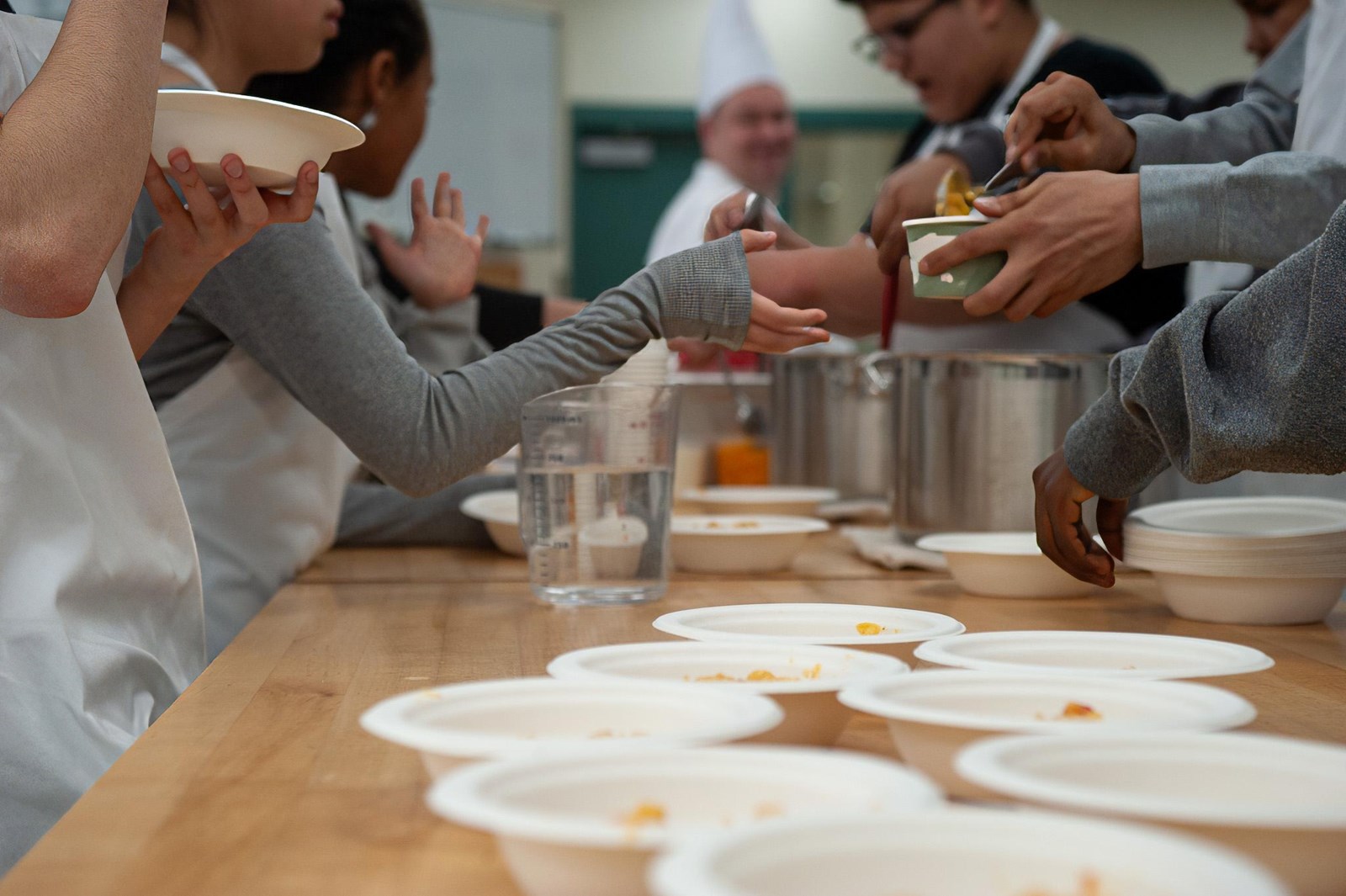
Ramadan hamper at RDC

What We Are Learning

Evidence we are watching
  • Uptake at the new Nelson McIntyre satellite hub
  • Feedback from the Windsor Park, Nelson McIntyre, and Collège Béliveau stakeholder committee
  • Number of schools and families connected through RDC programming
Public evidence

Opens that dashboard in a new tab. On a phone, turn it sideways.

What we are learning

Street data counts: Community Liaison Worker and Community Connector surveys are being treated as valid, primary evidence, surfacing lived experience invisible to quantitative metrics.

The clearest line from the centre into a classroom runs through food. The commissary kitchen at RDC supports nutrition programming for all 41 schools, so a student who has never set foot in the building is served by it.

What needs attention

Two things now need sustained attention rather than a decision. The first is the buildings. The network runs from two sites, and the satellite operates out of the former Norwood School Division board office beside Nelson McIntyre Collegiate, an older facility that will need ongoing care to stay fit for the families using it.

The second is evidence. What is not yet in place is a settled way to measure the network's impact in and with the communities it serves. Street data from Community Liaison Workers and Community Connectors is being treated as primary evidence, and that approach needs to mature into something the next leadership can track over time.

Ongoing

  • Continue strengthening wraparound services for families through expanded partnerships and ongoing community engagement.
  • Use stakeholder and community feedback to guide the development of new programming and services as needs evolve.
  • Maintain our commitment to improving support for families and schools by fostering comprehensive resources and helping every student and family thrive.
  • Build street data into how the network's impact is measured, so that what families and Community Liaison Workers describe counts as evidence alongside the numbers.
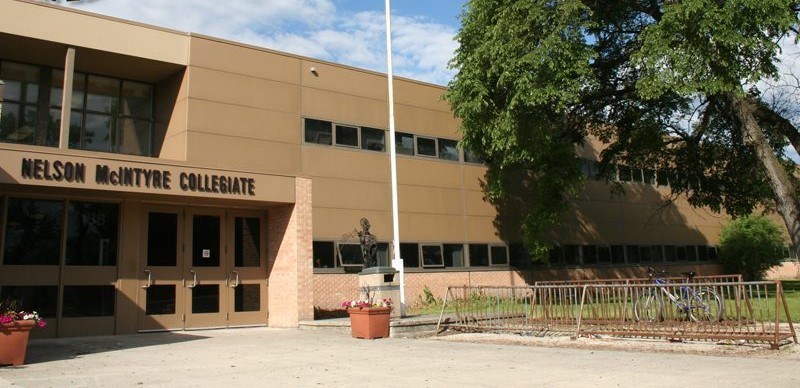
Nelson McIntyre Collegiate
Action 1.2 icon

Action 1.2

Create a comprehensive Workplace Safety and Health Program to promote and support employee wellness to better nurture student wellness.

In plain termsLook after the health, safety and wellbeing of the adults who work in our schools. Students do better when the staff around them are well.

Developing
What Has Changed

The Workplace Safety and Health Program has moved from baseline to school-level action. Building on the Guarding Minds at Work survey (February 2024, 2,000+ staff), 17 schools took part this year in a collaborative wellbeing process, with each school curating its own work instead of following a one-size-fits-all template. Incident reporting is online, and a focused effort on School and Classroom Support Team and Clinical Services roles is underway.

Read the full picture
Turning Data into Action in Schools

This year, schools were invited to participate in a collaborative process to explore staff wellbeing, with 17 schools taking part. In partnership with divisional staff, principals supported conversations with their teams to reflect on their experiences and identify what was most important to them now.

Rather than applying a one-size-fits-all approach, schools were supported in curating their wellbeing work based on their specific context, priorities, and staff feedback. Guiding the work were several key principles, including acknowledging current realities, engaging staff in planning, and focusing on meaningful, system-level change.

What the Work Looked Like in Schools

Across participating schools, the work was shaped by local priorities, but shared common elements grounded in reflection, collaboration, and relationship-building.

In some schools, staff participated in strengths-based team activities, exploring how individual strengths contribute to team dynamics and how differences can sometimes create both energy and tension. Other schools chose to revisit and build on the original Guarding Minds data: through facilitated sessions, staff shared their current perspectives, and that feedback was analyzed and returned to school leadership to inform planning.

In all cases, the process emphasized creating space for honest dialogue, reflection, and collective problem-solving. Importantly, schools were encouraged to see wellbeing not as an initiative, but as something embedded in all aspects of school planning and daily practice.

Strengthening Key Staff Supports

A focus of this work has been collaboration with the School and Classroom Support Team (SCST), which brings together the Instructional Support Team, the Indigenous Education and Languages Team, and the Clinical Services Team. Guarding Minds data suggested that some of these staff may face unique challenges, prompting further exploration.

This work has focused on understanding the complexity of these roles, gathering input from staff across disciplines, and working collaboratively with senior leadership to identify both short- and long-term actions. The goal is to ensure that these critical staff, who play an essential role in supporting students, feel supported, valued, and equipped to succeed in their work.

Early Signs of Impact

Many participating schools are incorporating wellbeing into their planning for the upcoming school year, identifying specific goals and strategies to strengthen staff experiences. Across the division, there is growing awareness of the importance of workplace culture and the role it plays in supporting staff and students. There are also signs of shifting mindsets, with leaders and staff increasingly recognizing the importance of collective approaches and the role of workplace conditions in shaping wellbeing.

The School and Classroom Support Team's own wellbeing action plan is the clearest example. Built with staff, its first short-term actions were complete or nearly complete by June 2026, notably those related to identification and access, including staff badges, fobs and parking clarity.

What We've Accomplished

  • Refined the WSH Program structure and engaged the WSH committee for oversight and guidance.
  • Partnered with Well at Work by EdCan, surveying over 2,000 staff members to gather baseline wellness data.
  • Enhanced wellness resources and increased promotion of employee and family assistance services across the division.
  • Moved incident reporting online, streamlining processes and improving data collection.
  • Drafted new Communication and Attendance Support policies.
  • Put the new Communication policy into practice division-wide.
  • Put the new Attendance Support policy into practice division-wide.
  • Expanded staff recognition programs and increased access to Staff Services.
  • Built a School and Classroom Support Team wellbeing action plan with staff, and delivered its first short-term actions. Identification and access supports, including staff badges, fobs and parking clarity, were complete or nearly complete by June 2026.
Diverse group of staff

What We Are Learning

Evidence we are watching
  • Guarding Minds at Work results (February 2024 baseline, 2,000+ staff)
  • Participation and outputs from the 17-school collaborative wellbeing process
  • Wellbeing goals appearing in 2026–27 school plans
  • Uptake of employee and family assistance services
  • Delivery of the School and Classroom Support Team wellbeing action plan, short-term actions and longer-term priorities
Public evidence

No public data source yet. Evidence for this action currently lives in internal and board-level reporting. A public dashboard remains an open opportunity for a future Data Hub cycle.

What we are learning

Wellbeing is shifting from an individual-strategies model, pointing staff to assistance programs, toward the conditions people actually work in. In seventeen schools this year that meant facilitated conversations in which staff named what mattered most to them now, with the feedback returned to school leadership to shape planning. The division's own framing captures the finding: wellbeing is not an initiative but something embedded in planning and daily practice.

The seventeen schools also produced a finding none of them could have reached alone. Schools with very different contexts named the same conditions: isolation, onboarding, staff dynamics, and staff wanting consistent and predictable responses to student behaviour. School leaders also named a gap between the support they intended to give and the support staff experienced.

What needs attention

The baseline itself is the open question. Guarding Minds was run in February 2024 and everything since has been built on it, but two things now sit against it. School leaders who took part this year said the results no longer reflected where their schools actually were, and a divisional focus group process in March 2026, which reached 60 staff across School and Classroom Support Team and Clinical Services roles, found that concerns around involvement and influence, psychological and social support, and workload had if anything intensified since the survey. Staff in that process also described a reluctance to speak up. A wellbeing program that cannot hear bad news is not measuring wellbeing. Deciding whether to refresh the baseline, replace the instrument, or measure differently is work for the incoming leadership team.

Ongoing

  • Continue to refine a robust, data-informed WSH Program that proactively addresses staff wellness needs.
  • Strengthen partnerships with Well at Work and benefits providers to expand resources.
  • Extend the school-level wellbeing process beyond the seventeen schools that took part this year, so that every school has a way to name its own conditions and act on them.
  • Carry the School and Classroom Support Team's longer-term priorities to the incoming leadership team: role clarity across the system, sustainable onboarding and mentoring, workload and caseload support, and consistent communication practices.
Action 1.3 icon

Action 1.3

Reinforce trauma-responsive practices.

In plain termsTrain staff to respond to a student in distress by asking what that student needs right now, rather than what the student did wrong.

Embedded
What Has Changed

TCIS, Cornell University's trauma-responsive model, is the division's standard, and the division built the capacity to teach it in-house. An internal network of 44 trainers, drawn from clinicians, student services teachers and administrators, delivers the training. Coverage followed: all leaders and clinicians trained as of 29 June 2025; all educational assistants and student services teachers through the comprehensive three-day training as of 1 May 2026; all teachers through a one-day session in 2025–26. School-based sessions have introduced TCIS principles to all staff who interact with students.

Read the full picture
Behaviour Is Communication

Therapeutic Crisis Intervention for Schools (TCIS), developed by Cornell University, is the division-wide trauma-responsive model. It is grounded in a simple idea: behaviour is a form of communication. When students are overwhelmed, dysregulated, or struggling, their actions are often expressing a need. Staff learn to ask not “What’s wrong?” but “What does this student need right now?”

One Framework, Every School

Rather than relying on isolated strategies or one-time training, LRSD adapted a common framework that can support every student, in every school, through a trauma-informed lens. A committee of teachers, clinicians, and school leaders defined the professional learning framework, and an internal network of trainers carries it into classrooms, hallways, and everyday interactions.

What We've Accomplished

  • Began developing a professional learning framework for trauma-responsive practices across the division.
  • Adapted Therapeutic Crisis Intervention for Schools (TCIS), from Cornell University, as the division-wide approach.
  • Built an internal network of 44 trainers, drawn from clinicians, student services teachers and administrators, so the division can deliver and sustain the training itself.
  • Completed training for all leaders and clinicians (29 June 2025), all educational assistants and student services teachers (1 May 2026), and all teachers through a one-day session in 2025–26.
Hands of people working together

What We Are Learning

Evidence we are watching
  • Training coverage: all leaders and clinicians as of 29 June 2025, all educational assistants and student services teachers as of 1 May 2026, all teachers through a one-day session in 2025–26, and 44 internal trainers
  • Consistency of practice across all 41 schools
  • How students transition back to learning after moments of distress
  • Critical incident counts as TCIS embeds; the action group's stated aim is to reduce them
What we are learning

A common language is itself the change: staff across 41 schools now share an approach, from planning ahead to 'dropping the rope' in moments that might otherwise escalate. The model's value shows up in small everyday moments, not dramatic interventions.

What needs attention

The division describes itself, accurately, as still in the middle of implementing the practice. The training is not what is unfinished: every staff member who works with students has been through TCIS, and that is what the stage on this card reports. Culture is the remaining test. Trained everywhere and practiced everywhere are different milestones.

Ongoing

  • Establish a sustainability plan for TCIS certifications and reviews.
  • Develop a statement on street data and measuring for impact, so that evidence of change includes what students and staff describe experiencing alongside the Data Hub's wellbeing and engagement dashboards, not only counts of critical incidents.
Action 1.4 icon

Action 1.4

Introduce Indigenous Language Nests for preschool-aged children in our family centres. Expand both the K–3 Indigenous Language Exposure curriculum and Grades 9–12 Indigenous Language Options to all schools.

In plain termsGive every child the chance to hear and use Indigenous languages, starting with preschoolers in our family centres and continuing through to Grade 12.

Developing
What Has Changed

The Indigenous Language Exposure curriculum is now universal from Kindergarten to Grade 2, and the language offering has expanded beyond Ojibwe to include Cree and Michif. Grade 3 remains to be reached. Indigenous Language and Culture courses ran in five high schools this year, reaching 105 students in Grades 9 to 12, and staff have been trained on the Moe the Mouse framework for Language Nests in family centres.

Read the full picture
Language Carries Worldview

Language carries worldview. Indigenous Language Nests introduce preschool-aged children to language in our family centres, and the Kindergarten to Grade 3 Indigenous Language Exposure curriculum and Grades 9 to 12 Indigenous Language Options extend that learning across schools.

Guided by Community

The Indigenous Education Community Council and the Indigenous Parent Program guide this work in partnership with families. Programs like Manito Ahbee Aki, Powwow Clubs, and Indigenous Youth Leadership give students living connections to culture alongside the language itself.

What We've Accomplished

  • Expanded the K–3 Indigenous Language Exposure curriculum to universal delivery for all Kindergarten to Grade 2 students, and widened the language offering from Ojibwe to include Cree and Michif.
  • Offered Indigenous Language and Culture courses in five high schools, Dakota Collegiate Institute, Collège Béliveau, Windsor Park Collegiate, Nelson McIntyre Collegiate and Glenlawn Collegiate Institute, reaching 105 students across Grades 9 to 12.
  • Trained staff on the "Moe the Mouse" framework for Language Nests in family centres.
Indigenous language learning outdoors

What We Are Learning

Evidence we are watching
  • Number of grades and schools with active Indigenous language instruction
  • Number of family centres with a functioning Language Nest
  • Grades 9 to 12 Indigenous Language and Culture enrolment, currently 105 students across five high schools
What we are learning

The clearest learning this year came from outside the division. At the World Indigenous Peoples' Conference on Education in 2025, LRSD staff shared our universal Indigenous Language Exposure Program and learned from Māori educators whose language was near extinction in the 1970s and 1980s. The first Kōhanga Reo language nests opened in 1982. Four decades on, immersion pathways are established and the language has community speakers again. Language nests work, and they work slowly.

The condition attached to that success is the part that shapes what we do next. Revitalization took hold where families and communities led it, rather than where institutions mandated it. That is why the expansion still ahead of us is relationship work more than rollout, and it is the reason Language Nests are in some family centres and not yet in all of them. It does not make the gap smaller. It does say what closing it will actually take.

What needs attention

Language Nests exist in some family centres, not all. Indigenous Language and Culture courses now run in five high schools, not every one. Both are real gaps between the commitment and where we are.

Ongoing

  • Expand the language program to include all Grade 3 classes across the division.
  • Establish Indigenous language programs in all high schools.
  • Complete the introduction of Language Nests in all family centres.
  • Describe what a language exposure session is actually like for a child, in the words of the families and educators in the room, so that reach is not the only thing this action can report.
Action 1.5 icon

Action 1.5

Reframe the Grade 11 English Language Arts curriculum to focus on Indigenous literature and perspectives while ensuring the Grade 11 History curriculum thoroughly explores Indigenous histories and perspectives.

In plain termsChange what students read and study in Grade 11 English and Grade 11 History so that Indigenous writers, histories and ways of seeing the world are part of the course itself, not an add-on.

Developing
What Has Changed

Both halves of this action have now completed working-group cycles with published resources. Grade 11 History: two days of professional learning for all LRSD History teachers (May 2024), a 2024–25 working group with one to two teachers from every high school, a History Reframing Guide, and a 32-page collection of classroom stories of practice. Grade 11 ELA: a 2025–26 working group supported by Niigaan Sinclair, land-based learning and cultural teachings with Knowledge Keeper Stan Kipling, an ELA Reframing Guide, and a 21-page stories-of-practice collection. An All Disciplines Reframing Guide and a Land-Based Reflection Tool extend the approach beyond the two courses, and it has begun to inform other subjects, including Science.

Read the full picture
The Curricular Heart of the Commitment

The Circle of Courage frames the division’s renewed relationship with Indigenous learners and families. Reframing Grade 11 ELA and History is the curricular heart of that commitment: the courses where every student encounters whose stories count as literature and whose past counts as history. The work is guided by the Indigenous Education Community Council and carried by LRSD teachers working directly with Knowledge Keepers and scholars.

What We've Accomplished

  • Completed 2024–25: the Grade 11 History curriculum now explores Indigenous histories and perspectives, framed with Indigenous pedagogies.
  • Completed 2025–26: the Grade 11 ELA reframing, with an ELA Reframing Guide and a collection of stories of practice now in teachers' hands.
  • Held a division-wide Treaty Education Learning Journey on 1 October 2025, gathering all staff at the RBC Convention Centre for keynote learning with Niigaan Sinclair and Kevin Chief, followed by school-based afternoon sessions in which staff developed their own stories of practice, reflected through Mamàhtawisiwin, and connected classroom work to the Truth and Reconciliation Commission's Calls to Action 62 to 64 and UNDRIP.
Closeup of hands building tipi

What We Are Learning

Evidence we are watching
  • Classroom uptake of the Reframing Guides and stories of practice across all high schools
  • The three completed guides (ELA, History, All Disciplines), each organized around Meaningful Learning, Indigenous Worldviews, and Centring Land
  • Spread beyond Grade 11: the Land-Based Learning Reflection tool (currently in draft) and early adoption in Science
What we are learning

Text is bigger than print. The ELA reframing treats land, relationship, and lived experience as text, and the working group's own learning followed that path: land-based learning and cultural teachings with Knowledge Keeper Stan Kipling, alongside Niigaan Sinclair's work with the group on broader understandings of what counts as text. And the reframing question proved transferable: what began as two Grade 11 courses produced an approach any discipline can use. That approach travelled further than the two courses. When the whole division set aside a day for Treaty education in October 2025, the central activity of the afternoon was staff developing their own stories of practice, the same method the History working group had used the year before. What began as one group's technique became, for a day, the division's.

What that looks like for a student: Grade 11 English classes walked the Seine or the Red, reading the river itself as a text, and spent a day at St. Vital Park on Treaty 1 territory writing land-inspired poetry, telling stories through photography, and talking in circle about what they had noticed. One class read Richard Wagamese's short story “Freeing the Pike” and then went fishing on the Red River, so that the reading and the experience explained each other. The teachers who wrote this up recorded deeper engagement and more authentic writing.

What needs attention

Classroom reach is the open question. The resources now exist for both courses, but how many Grade 11 classrooms are actually teaching through the guides and stories of practice is not measured. That uptake evidence is what would move this action to Embedded.

Ongoing

  • Measure classroom reach, so the division knows how many Grade 11 classrooms are teaching through the guides.
  • Carry the approach beyond Grade 11, building on the All Disciplines Reframing Guide and the Land-Based Learning Reflection tool.
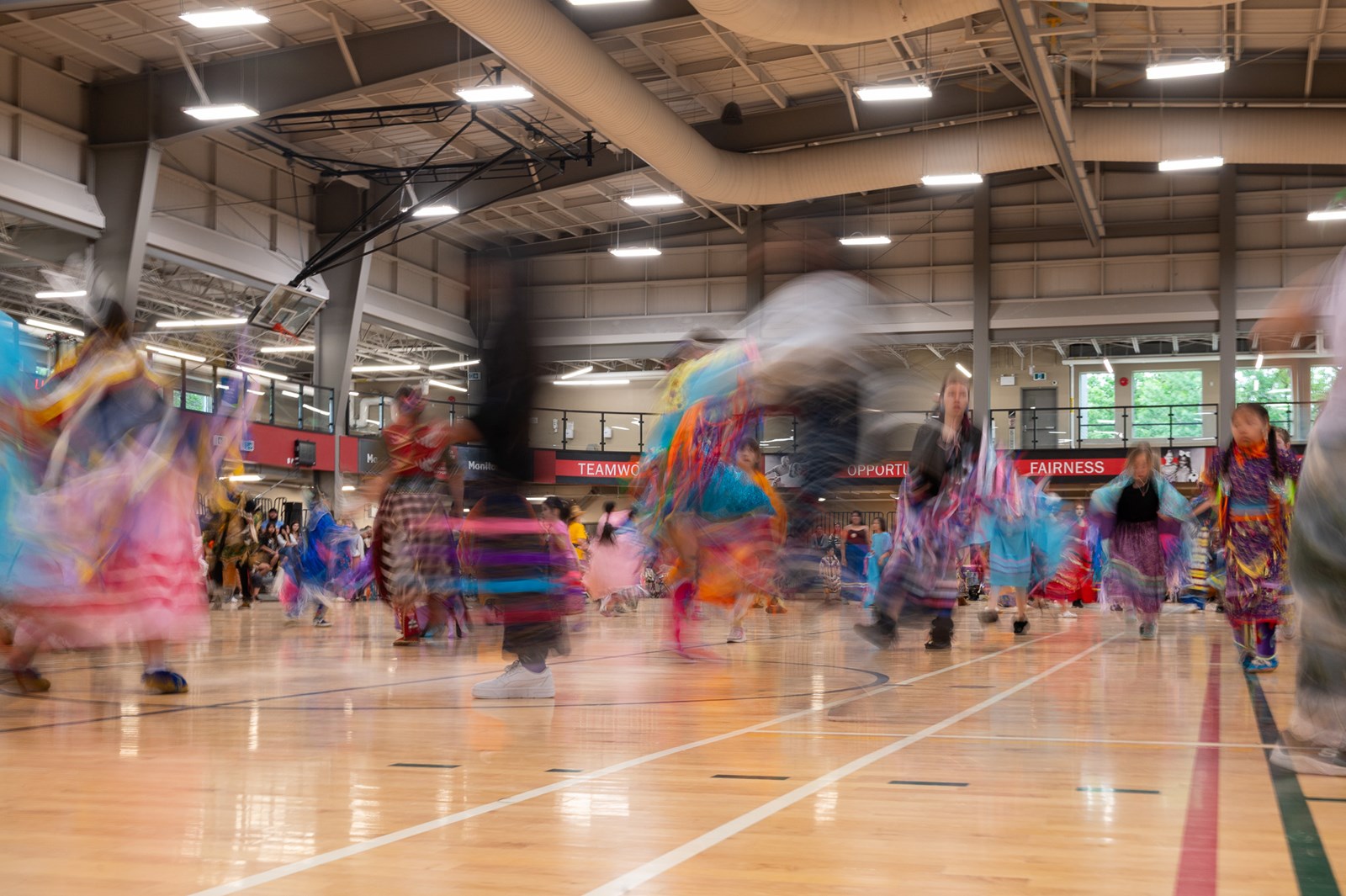
Dancers at LRSD Grad Powwow
Action 1.6 icon

Action 1.6

Expand International and Heritage Language options in high schools.

In plain termsLet high school students earn credit for studying a language spoken in their family or their community.

Emerging
What Has Changed

One new option in three years, against a promise of all high schools. Spanish credit courses are guaranteed in our two French Immersion high schools, Collège Béliveau and Collège Jeanne-Sauvé, and Collège Jeanne-Sauvé added Introduction to Japanese this year. Students at any LRSD high school can challenge for credit in a language they already speak, through Dakota Collegiate. Measured against the 2027 commitment that every high school will offer at least one option, that is movement and it is not close. What has changed faster is the ground underneath. Students across the division are earning credit in languages the division does not teach: Mandarin, Filipino, German, Hebrew, Polish, Portuguese, Ukrainian and more. That is not a program working. It is families keeping languages alive at home, and students finding their own way to have that counted. Twenty per cent of LRSD students identify English as an additional language. This is worth celebrating, and it is worth building on.

Read the full picture
Languages Our Families Speak

LRSD students and families speak dozens of languages at home. Fifty-seven per cent of our students identify as IBPOC, and twenty per cent identify English as an additional language. The languages most often reported include French, Arabic, Vietnamese, Spanish, Tagalog, Ukrainian, Punjabi, Russian, Hindi, Chinese and Urdu.

International and Heritage Language courses let students study a language of their heritage for credit, keep it alive across generations, and build skills that carry value beyond school.

A Question Rather Than a Report

The 2023 plan committed to expanding International and Heritage Language options in high schools. Three years in, the honest account is that access has not widened, and that the promise as written may be the smaller version of the real one.

Adding sections of one language is one kind of work. Recognizing, sustaining and building on the languages students already speak is another, and it is the larger task. This card names that rather than reporting progress against the narrower goal.

We are not stepping back from this commitment. We are asking whether the commitment as written was large enough.

What We've Accomplished

  • Spanish credit courses are offered at Collège Béliveau and Collège Jeanne-Sauvé, and students from any LRSD high school may challenge for credit through Dakota Collegiate.
  • Collège Jeanne-Sauvé added Introduction to Japanese in 2025–26, the first new International Language option in the life of this plan.
  • Students who already speak a language can earn credit by challenging for it. This is open to students at every LRSD high school and is arranged through Dakota Collegiate. LRSD students have earned credit this way in Chinese (Mandarin), Filipino, German, Hebrew, Japanese, Polish, Portuguese, Spanish and Ukrainian, and in Indigenous languages.
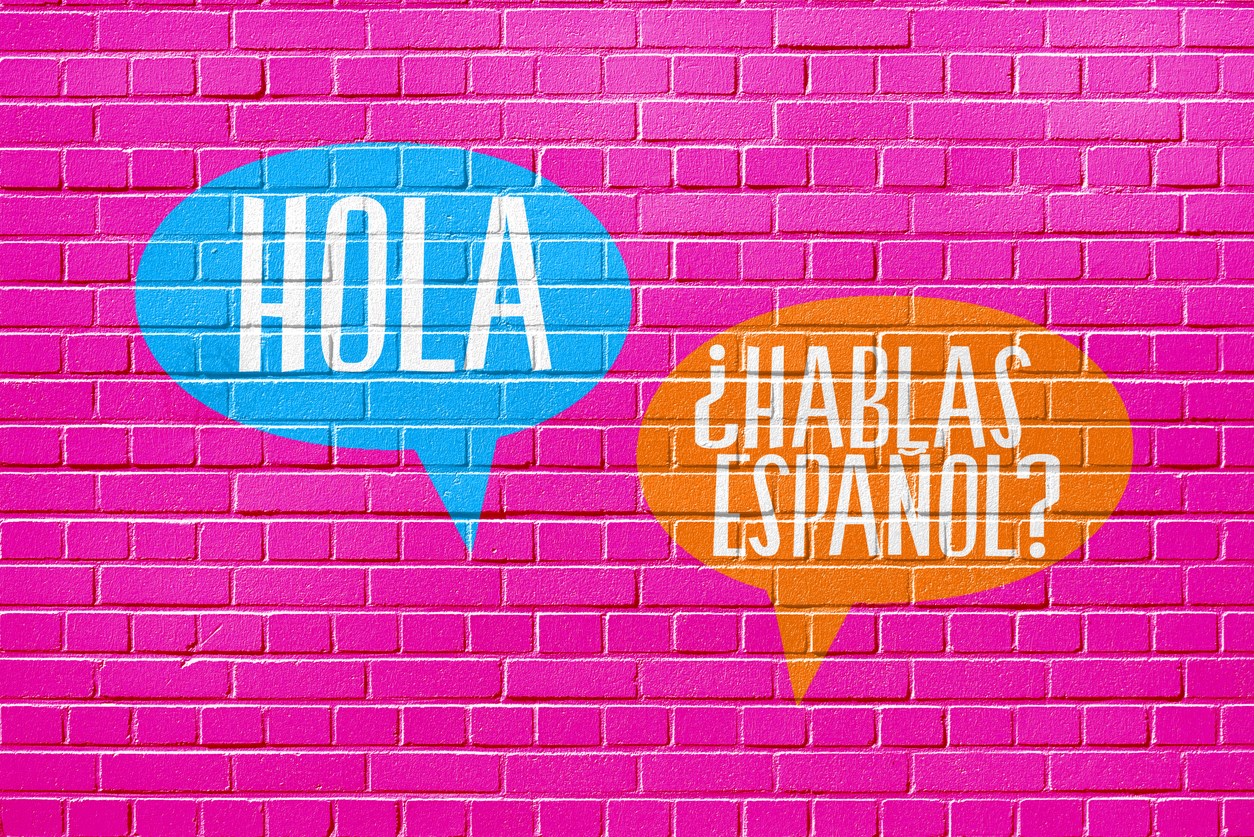
Hola and Hablas Español in word balloons on wall

What We Are Learning

Evidence we are watching
  • Number of high schools offering at least one International/Heritage Language option, against the 2027 target of all high schools
  • The languages students report speaking, and how that profile shifts year over year
  • Whether students can earn credit for a language they already speak, and by what route
Public evidence

Opens that dashboard in a new tab. On a phone, turn it sideways.

What we are learning

The story here is not the growth of Spanish. It is the linguistic reality of the division. Students arrive already fluent in languages the school system mostly does not count, and the question that matters is not how many sections of one language we can add. It is how schools recognize, sustain and build on what students already carry.

One part of an answer already exists and is barely known. A student who already speaks a language can challenge for the credit rather than wait for a school to offer the course, and LRSD students have done exactly that in Chinese (Mandarin), Filipino, German, Hebrew, Japanese, Polish, Portuguese, Spanish and Ukrainian, and in Indigenous languages. That route recognizes what a student already carries, which is what the larger question is about.

That route is also self-serve. A student has to know it exists, ask for it, and arrange it. The number of students who have found it, in languages no LRSD school teaches, says this is not a small group of exceptions. It is students telling us, one registration at a time, that the languages of this division are alive in its homes.

We do not have a good answer yet. Naming the question plainly is the most useful thing this card can do before the next plan is written.

What needs attention

One high school added one language this year. The promise as written is that every high school will offer at least one option by 2027, and that is not yet true. That is why this stays staged as a promise made rather than a promise being kept, and it is a change from how this page described it earlier in 2026.

The harder issue is the promise itself. What should the next Multi-Year Strategic Plan commit to: more sections of more languages, or a way for schools to work with the multilingualism students already bring through the door? We would rather put that question to the community than answer it here.

Ongoing

  • By 2027, all high schools in the Louis Riel School Division will offer at least one International/Heritage Language option to students. That remains the plan’s commitment.
  • Ask the better question in the next plan: how do schools recognize, sustain and build on the languages students already speak?
Pieces of paper with Thank You written in many different languages
Back to top ↑
Mastery

Strategic Priority 2

Mastery

6 Actions

Mastery is about teaching that begins from who each student already is. Universal screening, the framework for neurodiversity and diverse abilities, and access to French Immersion are embedded. The divisional approach to social and emotional learning is still developing. The learner-centred approach that runs through this whole priority, and support for French teaching in English program schools, are at their earliest stage.

3Embedded
1Developing
2Emerging
Action 2.1 icon

Action 2.1

Strengthen a learner-centred and holistic approach to ensure instruction is tailored to meet and build on the unique needs, interests, aptitudes, and abilities of each student.

In plain termsTeach in a way that starts from who the student is and what they can already do, instead of delivering the same lesson the same way to everyone.

Emerging
What Has Changed

This action is unlike the other twenty-four, and its progress shows up in many cards rather than in this one. Schools understand learners better through the Resource Allocation and Planning Framework, identify needs earlier through Action 2.3, and remove barriers through Action 2.2. Wellbeing is supported through Action 2.4, learner agency grows through Action 3.1, the reframed Grade 11 courses in Action 1.5 show what learner-centred practice looks like inside a subject, and Action 3.4 builds on the languages multilingual learners already bring. This is not only an LRSD ambition: Manitoba defines differentiated instruction in regulation and requires every division to provide appropriate programming for every student. Teaching this way is the work of a career, and no plan finishes it.

Read the full picture
Starting From the Student

One-size-fits-all instruction fits almost no one. A learner-centred approach starts instructional planning from the student: their needs, interests, aptitudes, and abilities. It is also asset-based. Rather than cataloguing deficits, teachers identify what a student already brings and build from there. Engagement and belonging follow strength, not remediation.

A Shared Planning Framework

In 2023-24, principals, student services teachers, and clinicians collaboratively developed LRSD’s Resource Allocation and Planning Framework (RAF), adapting a model from British Columbia’s Surrey School District to LRSD’s context and priorities. The RAF gives every school the same language for student supports: three priority areas (Health Care, Access, and Instructional Supports) and five proximity levels describing how much support a student needs and how close it must be.

Support data is captured centrally and visible to school leaders, student services teachers, and clinicians through Power BI. Every support documented in the RAF is targeted toward removing barriers to meaningful engagement and, wherever possible, toward greater student independence.

What We've Accomplished

This tab is deliberately empty, and that is the honest answer. This action was not a project with its own deliverables. The 2023 commitment was to strengthen an approach, not to build something, and what has been accomplished is recorded on Actions 1.5, 2.2, 2.3, 2.4, 3.1 and 3.4, because that is where the work happens. Listing it again here would count it twice.

What We Are Learning

Evidence we are watching
  • What students say about their own learning, gathered as street data, since students are the ones who experience whether teaching starts from who they are
  • The range of practice the division can describe, and how much of that description comes from students rather than about them
  • Whether the gathering reaches across all 41 schools over time
Public evidence
What we are learning

The clearest learning from this action is recorded in the Resource Allocation and Planning Framework, and it is about conditions rather than techniques. Shared language, shared data and shared responsibility are what allow principals, student services teachers and clinicians to plan consistently across 41 schools. The working group was asked to design from educational priorities rather than technical limitations, and the software was built afterwards to fit the model.

One finding has already changed practice. Because the framework documents every adult support a student receives, including instructional supports that sit outside formal plans, it makes visible how support is actually distributed across staff roles. That visibility is what stops schools defaulting to educational assistants as the answer to every need.

What needs attention

Emerging here does not mean nothing is happening. Learner-centred practice runs through this division, and descriptions of it exist: in classrooms, in planning conversations, and in the stories of practice written for Action 1.5. What does not yet exist is a shared one, built from those descriptions and specific enough that a teacher would recognize it and a school could see itself in it. They are held individually rather than collectively, so the division can point to fine examples and cannot yet learn from the whole range. Because this action is enacted through the others, it can also disappear into them, and until the evidence is gathered deliberately, this action will keep being reported through other actions' evidence rather than its own.

Ongoing

  • Devote an SCST action group to this work in 2026–27, collaborating with schools to give the approach shape.
  • Build the shared description from practice rather than from theory, using the method proved in Action 1.5: a short guide of guiding questions and applications, then stories of practice written by the teachers doing the work.
  • Gather those stories on a sustained cycle, so that every school can see itself in the collection and the division learns from the full range of practice rather than from whichever examples surface first.
  • Put students at the centre of gathering that evidence, since they are the ones who experience whether teaching starts from who they are.
Action 2.2 icon

Action 2.2

Develop a framework to assist staff in supporting neurodiversity and diverse abilities in our classrooms.

In plain termsGive staff a clear, shared way to support students who learn and experience the world differently, including students with disabilities, so they can succeed at their own school.

Embedded
What Has Changed

This is the most active action on the page by volume: a Student Support Resource Allocation Framework, increased OT/Physiotherapy and SLP time, sensory and developmental spaces in 19 schools, AAC devices and Playground Communication Boards, and PATH/MAPS training for transition planning. This year added the Therapeutic Swim Program's first divisionally coordinated season: students with complex physical, medical, and sensory needs, brought together across families of schools for six-week warm-water blocks with clinical support. For several of those students it was the first time they had ever been in a pool; by the sixth week the question staff heard most was whether it could keep going.

Read the full picture
The Inclusion Commitment

Nearly all students, whatever their needs or abilities, should be able to learn in their community school. That is the inclusion commitment behind this action. Delivering it takes resource allocation, sensory-friendly spaces, targeted professional development, clinical capacity, and close work with families and community partners. The framework that ties those pieces together is the deliverable this action is named for.

Resource Allocation, Made Visible

The Resource Allocation and Planning Framework (RAF) documents every adult support a student requires, including instructional supports that fall outside formal plans. That breadth matters: it shows how support is distributed across staff roles and helps schools avoid defaulting to educational assistants as the primary support mechanism.

For planning, RAF data is translated into two complementary measures. The Cumulative Weighted Score accounts for all identified supports and gives a divisional view of overall support intensity, grouped into three bands: Intensive, Moderate, and Minimal. The Complexity Score uses the most intensive support identified for each student, and aggregates to the class, school, and divisional levels. The bands describe the level of support provided, not characteristics of individual students. The result is staffing and class composition decisions that rest on shared evidence.

What We've Accomplished

  • Developed and presented a new vision to the school board for supporting diverse and neurodiverse learners.
  • Implemented the Resource Allocation and Planning Framework, the shared way schools record what supports a student needs so that staffing and class composition decisions rest on the same evidence.
  • Built clinical capacity across the division: more Occupational Therapy and Physiotherapy time, divisional Speech-Language Pathologist time for Augmentative and Alternative Communication, clinical time assigned to the School and Classroom Support Team, more developmental music and phys. ed staffing, a priority hierarchy for OT, SLP and Physiotherapy, a database to distribute clinical services by need, and new support for schools around executive functioning.
  • Developed movement, sensory, and developmental spaces in schools across the division, including ceiling-mounted indoor swings to support student regulation.
  • Integrated professional development for supporting neurodiverse learners into mandatory Student Services Teacher PD.
  • Trained additional staff in PATH/MAPS to support students transitioning to adulthood.
  • Expanded access to communication: collaboration with Jordan's Principle to expedite AAC device applications, community information evenings for caregivers of children who use them, and Playground Communication Boards so that communication is accessible outside the classroom too.
  • Expanded assistive technology: trial iPads for non-speaking students, and devices for students with learning disabilities. Access to Microsoft Learning Tools is universal across the division.
  • Strengthened transitions: collaboration between middle and high schools, and a working group with parents and staff creating transition protocols for students with additional needs.

What We Are Learning

Evidence we are watching
  • Number of schools with movement, sensory, and developmental spaces
  • AAC device deployment and Jordan's Principle application turnaround
  • Clinical service distribution against the priority-hierarchy database
Public evidence

No public data source yet. Evidence for this action currently lives in internal and board-level reporting. A public dashboard remains an open opportunity for a future Data Hub cycle.

What we are learning

Capability shows up when the environment changes. That is the framework's core claim, and the year's clearest test of it was the Therapeutic Swim Program: students with complex physical, medical and sensory needs, several of them in a pool for the first time, and staff who came back describing a different sense of what those students could do. The environment changed and what was possible changed with it.

What needs attention

The framework this action is named for is the Resource Allocation and Planning Framework, and it is in use across the division: shared language for describing what a student needs, shared data visible to school leaders, student services teachers and clinicians, and shared responsibility for planning. That is why this now reads as a promise you no longer need to check on.

What is not finished is reach. Movement, sensory and developmental spaces are in many schools, not all of them. Augmentative and Alternative Communication devices are not yet with every non-speaking student who would benefit. The Individual Education Plan process is not yet aligned to the resource allocation model. Embedded here means the framework is now the way the division works. It does not mean every student is yet reached by everything the framework makes possible.

Ongoing

  • Equip all elementary schools with movement, sensory, and developmental spaces, including required staff training.
  • Fully implement Augmentative and Alternative Communication (AAC) devices for all non-speaking students where appropriate.
  • Standardize the Individualized Education Plan (IEP) process to align with the resource allocation model.
  • Ensure a comprehensive programming approach for all students up to age 21.
Action 2.3 icon

Action 2.3

Implement universal early screening and monitoring to ensure a preventive and proactive approach to teaching and systemic interventions.

In plain termsCheck every young child's early reading and math skills in the same way, so that a child who needs extra help is noticed early rather than years later.

Embedded
What Has Changed

Universal literacy screening (CTOPP-2) and numeracy screening (K–4) are running, alongside DIBELS progress monitoring through Grade 8 and French Immersion tools: THaFoL in the early years, IDAPEL in Grades 3 to 5. A professional development program and data collection system support staff in using the results.

Read the full picture
Prevention Beats Remediation

Prevention beats remediation, and prevention needs information. Universal screening gives every school the same early picture of every child’s literacy and numeracy, in English and in French Immersion, so support starts before struggle compounds.

Screening Only Matters If It Changes Teaching

The professional development program and data systems exist to turn results into instruction: universal screening for Kindergarten and Grade 1, progress monitoring through Grade 8, early math screening in Kindergarten to Grade 4, and classroom assessment tools that put the information where teaching decisions are made.

What We've Accomplished

  • Implemented universal literacy screening for K–1 students (CTOPP-2).
  • Adopted universal progress monitoring for Kindergarten to Grade 8 in English program schools, and for Grades 2 to 8 in French Immersion schools (DIBELS).
  • Developed a universal progress monitoring tool for Kindergarten to Grade 2 in French Immersion (THaFoL), built with LRSD's research partners at the Ontario Institute for Studies in Education.
  • Introduced Acadience Reading Français (IDAPEL), a French reading fluency measure, for French Immersion Grades 3 to 5. The tool is in its study phase.
  • Established a robust professional development program for school teams.
  • Created a literacy skills scope and sequence aligned with the curriculum.
  • Developed a data collection system for staff to analyze screening results.
  • Refined the systematic approach for supporting students with assistive technology.
  • Implemented universal numeracy screening for K–4 using the Early Math Assessment tool.
  • Developed a comprehensive professional learning model for numeracy instruction.
  • Developed classroom numeracy assessment tools for Grades 1–9 to inform practice.
  • Built Responsive Instructional Guides for Grades 1 to 9, identifying no more than eight foundational outcomes per grade and sequencing them so learning scaffolds across three bands. Forty-six teachers in 28 schools took part.
  • Implemented a play-based, evidence-based approach for Kindergarten numeracy.
  • Implemented intervention resources for learners who do not meet screening benchmarks.
Students working together in a classroom

What We Are Learning

Evidence we are watching
  • Screening completion rates, K–1 literacy and K–4 numeracy
  • Proportion of students below benchmark receiving tiered intervention
What we are learning

In the screening action group's own words: the challenge is not simply identifying students earlier. It is building consistent school-based routines that help teams understand barriers, match supports, and monitor whether those supports are working. Their survey work also named the top access barriers plainly: non-verbal factors for literacy screening, attendance for numeracy.

Screening exists to open a door, not to close one. A result below benchmark is a signal to look more closely at what a child needs, not a label a child carries, and the same care applies to how results are described to families. The risk of any universal screening tool is that it becomes another way of sorting children, and guarding against that is part of running it well.

What needs attention

One gap is structural rather than local, and it matters most on a card staged Embedded. LRSD's own screening summary states plainly that there is no evidence-based, reliable and valid comparable French reading measure available for Immersion students in Grade 3 and up. IDAPEL is being used in the meantime and is still in its study phase. Until that settles, French Immersion students in the middle years are monitored on a tool the division itself describes as unproven, and results from those grades should be read with that in mind.

Access to the screening itself is the second gap. The action group's survey named the two largest barriers plainly: non-verbal factors in literacy screening, and attendance in numeracy. A child who is not in the room is not screened, and a screen that depends on speech will under-serve a child who does not use it. Anticipating and reducing those barriers is part of the work, not a footnote to it.

The reporting and communication scaffolding is built. Screening data flows through PowerSchool into Power BI reports available to administrators, clinicians, and teachers; every Kindergarten family receives a divisional letter each September explaining the process; and families of students below benchmark are contacted in March. Sample follow-up communications for schools are still in development. The harder work is consistency: turning results into school-based routines that reliably change teaching.

Ongoing

  • Improve how staff read and use the screening reports, which exist and flow through Power BI, so that finding the answer takes less work than finding the report.
  • Ensure classroom practices consistently reflect screening results and influence planning.
  • Establish systematic, tiered intervention processes in all schools.
  • Apply the parent communication protocols consistently in every school, so that what a family is told about screening does not depend on which school their child attends.
  • Carry the School and Classroom Support Team's screening work forward from identification to impact: not only who was screened, but whether the supports that followed changed anything.
A student reading with a teacher
Action 2.4 icon

Action 2.4

Create and implement a social and emotional learning curriculum in all classrooms.

In plain termsTeach students the skills for handling feelings, building friendships and making good decisions, in a consistent way in every classroom rather than differently from one school to the next.

Developing
What Has Changed

The division is not starting from zero. Roots of Empathy has run in LRSD since 2002, reaching more than 11,500 students through 545 programs, with 37 programs in 32 schools in 2025–26, and Seeds of Empathy ran in five family centres this year, with all Family Centre staff trained since fall 2024. Teachers and schools across the division are already doing this work at every grade level, drawing on the CASEL framework and on approaches such as Responsive Classroom. What has been missing is a shared approach. That direction is now taking shape: an SCST action group is building an LRSD Social-Emotional Learning Framework, informed by the CASEL domains but grounded in Indigenous worldviews and land-based ways of knowing, drawing on the Circle of Courage, Two-Eyed Seeing, and Mamàhtawisiwin, and neurodiversity affirming. Next steps are finishing the statement at its centre, linking resources to Tier 1, 2, and 3 activities, and creating a self-assessment for educators and support staff.

Read the full picture
The Research Is Consistent

Students who can name what they are feeling, understand others, make responsible decisions and build good relationships do better in school and beyond. The research on this is consistent.

A Way of Being in School

Effective SEL is not a program or an add-on. It is a way of being in school. The approach embeds social-emotional learning in existing curricula and daily routines, and it starts with adults: staff who are steady and well supported can offer students the consistent relationships in which these skills grow.

The framework being built is grounded in Indigenous worldviews and land-based ways of knowing, and its Circle of Courage foundation names four universal needs: belonging, mastery, independence and generosity. Those are the four priorities this entire plan is organized around, which is not a coincidence.

What We've Accomplished

  • Began developing the LRSD Social-Emotional Learning Framework through an SCST action group, with a draft statement written and not yet finalized as of May 2026.

What We Are Learning

Evidence we are watching
  • Manitoba Annual Program Evaluation (April 2026): 97 per cent of teachers agreed Roots of Empathy supported students' mental health and wellbeing; 95 per cent of students and 96 per cent of parents reported positive effects
  • Roots of Empathy reach: 37 programs in 32 of 41 schools
  • Indicators for the divisional framework, still to be defined
Public evidence

Opens that dashboard in a new tab. On a phone, turn it sideways.

What we are learning

The strongest SEL evidence in the division belongs to a program that has run quietly for more than two decades. It is not the only base. Teachers across the division are already working from CASEL, from Responsive Classroom and from their own practice, at every grade level. What none of that adds up to yet is a shared approach, and the framework's job is to build on what is already there rather than around it.

What needs attention

The commitment as written was a social and emotional learning curriculum in all classrooms. Three years in, that curriculum does not exist, and the division is no longer looking for one: SEL is not a program to be installed, and a purchased curriculum turned out to be the wrong instrument for it. The division is building its own framework instead, a statement at its centre with resources linked to Tier 1, 2 and 3 activities. That framework is how this commitment is being met, and it is not yet finished. Established programming in 32 of 41 schools is a foundation, not the finish line. This action reads as Developing rather than Emerging because the promise is already being kept in many places: social and emotional learning has been emphasized in schools across the division for years, through Roots of Empathy and through the daily work of teachers. What has not existed is a sustained approach from Kindergarten to Grade 12, so the variation is in approach rather than in commitment. The framework is what would close that gap. This card would read Embedded when the framework is finished and every school is working from it.

Ongoing

  • Finish the framework statement and link resources to Tier 1, 2 and 3 activities.
  • Create a social and emotional learning self-assessment for educators and support staff.
  • Finalize the framework by June 2027.
Action 2.5 icon

Action 2.5

Make the French Immersion program easier to access by introducing new entry points and meeting the needs of all learners.

In plain termsCreate more ways to join French Immersion than starting in Kindergarten, and support students so they stay.

Embedded
What Has Changed

New entry points are now multi-site and producing results. Middle Immersion (Grade 4) opened at a third school in September 2025, École Mazina-Giizhik, which welcomed 815 students from Kindergarten to Grade 8 in its first year. Late Immersion (Grade 6) was to be housed there as well; enrolment pressure moved it to École Van Belleghem, where the first Grade 6 cohort completed the year having gone from little or no French to confident use in academic and social settings. The new school also returned the division to a single-track model across all French Immersion schools, and a retention analytic tool by school and grade has been presented to trustees. Retention support is also extending beyond the classroom: a newly approved partnership between Collège Béliveau and Windsor Park Collegiate takes effect in 2026–27. Students remain enrolled at Béliveau while playing Royals football, and players are also eligible for WPC's Football Academy physical education course. No student has to choose between the language and the sport.

Read the full picture
Guided by Students and Policy

In November 2023, all French Immersion staff took part in professional learning centred on the new provincial French Immersion policy, anchored by a student panel. That reflective process helps the division celebrate strengths and identify growth, keeping the program vibrant and effective.

More Ways In

Middle Immersion (Grade 4 entry) has been part of LRSD since 2006, beginning in one school. As of September 2025 it runs in three: École Julie-Riel, École Henri-Bergeron, and École Mazina-Giizhik, with divisional bussing so that a Grade 4 entry point is reachable from anywhere in the division. Late Immersion (Grade 6 entry) opened at École Van Belleghem in September 2025, creating a pathway for newcomers and late deciders who missed entry in Kindergarten or Grade 4.

What We've Accomplished

  • Organized comprehensive professional learning in November 2023 on The French Immersion Policy in Manitoba (Manitoba Education, May 2023) for all French Immersion staff, anchored by a student panel. Staff reflected on instructional practice, named the strengths and strategies worth keeping, identified what needed fine-tuning, decided what new approaches to adopt, and named the practices to leave behind.
  • Developed analytic tool to examine retention rates by school, grade, and over time.
  • Presented detailed report to trustees at the Board meeting of 17 December 2024.
  • Introduced Middle Immersion (Grade 4 entry) in September 2025, boosting spaces by 50 per cent.
  • Launched Late Immersion (Grade 6 entry) to provide access for students, particularly newcomers, who missed earlier entry points.
  • Reintroduced the single-track model across all LRSD French Immersion schools when the new school opened its doors in September 2025.
  • Implemented Recommendation 2.4.1 of The French Immersion Policy in Manitoba.
Students in a French Immersion classroom

What We Are Learning

Evidence we are watching
  • Retention rates by school, grade, and year, using the new analytic tool
  • Enrolment in Middle and Late Immersion entry points
What we are learning

The November 2023 staff reflection session named specific outdated practices to retire, not just strengths to keep. That's a genuine finding, not just an accomplishment: some existing French Immersion practice was identified as no longer serving students well. The first Late Immersion year added a second finding: the families reached were disproportionately those new to Canada or who had missed earlier entry points. The access gap this closed was real. And retention levers are not all academic: the football partnership names a quiet truth, that students sometimes leave immersion for reasons a schedule or a team can fix. Its Football Academy course eligibility also sets a structural precedent: cross-school course access without giving up home-school enrolment.

The first Late Immersion year also produced the kind of evidence a retention tool cannot capture. Grade 6 students who began September certain they could not learn French finished the year speaking it in front of the whole school, describing themselves as proud and a little astonished at their own progress. Their principal expects that by Grade 9, when they join the regular stream, nobody will be able to tell they started late.

What needs attention

Embedded here means the new entry points exist and are running in more than one school: Middle Immersion at three sites with divisional bussing, Late Immersion at a fourth. It does not mean the students who take them stay. Expansion beyond the first sites has begun. The question now shifts from whether new entry points work to retention: what happens as the first cohorts move toward Grade 9 and merge with the regular stream.

Ongoing

  • Principals and vice-principals will use the analytic tool to better understand current French Immersion retention rates and to develop a plan for enhancing them over time.
  • Middle Immersion and Late Immersion will be offered in multiple sites throughout the Division.
  • Use the neurodiversity and diverse abilities framework (Action 2.2) inside French Immersion, so that more students feel successful in the program, retention improves, and more families see French Immersion as a good fit for their child.
Action 2.6 icon

Action 2.6

Enhance French Language teaching and learning in English program schools.

In plain termsEvery student in the English program learns some French. This action is about supporting the teachers who teach it.

Emerging
What Has Changed

The tool for this work was already in place. Français : communication et culture, a bilingual support portal for teachers of French in the English program, predates this plan and has been kept up to date since. Staff have been told what professional learning is available to them. What the plan promised was the connecting: a professional learning community across schools, a more cohesive approach to teaching French, and more students carrying French into high school. None of that has happened yet, which is why this is still a promise made rather than a promise being kept.

Read the full picture
French in the English Program

Every student in the English program studies French. The work here is to make sure the teachers who carry that instruction are connected, supported, and consistently aware of professional learning designed for them. A bilingual support portal, Français : communication et culture, has been available to them since before this plan began and is updated on an ongoing basis. It holds contact information for experienced colleagues willing to share strategies, video clips of students speaking French, and resources teachers can use in their classrooms. It is an internal staff site, so it is described here rather than linked.

A Connected Community

The goal is a professional learning community for French teachers across the English program: shared practice, a cohesive instructional model, deeper student engagement, and more students carrying French through to high school.

What We've Accomplished

  • Communicated professional learning opportunities related to teaching French in the English program to all staff.

What We Are Learning

Evidence we are watching
Not yet defined, which by year three of four is itself the finding. The obvious first measure is how many teachers of French in the English program are connected to one another, through the portal or otherwise. Naming that is the next step, not a later one.
Public evidence

No public data source yet. Evidence for this action currently lives in internal and board-level reporting. A public dashboard remains an open opportunity for a future Data Hub cycle.

What we are learning

The learning here is that the tool was never the constraint. The portal has been available since before this plan began and has been kept current throughout it, and teachers of French in the English program are still not connected to one another. For three years a professional learning commitment was treated as a communications task: tell teachers what is available and hope they find one another. A place to meet is not the same as a reason and an occasion to meet.

The reasoning behind the commitment is worth stating so that it can be tested. A teacher of French in an English program school is often the only one in the building, and that isolation makes a consistent instructional approach hard to build. Connecting those teachers should produce more consistency, and more consistency should mean more students carry French into high school.

There is also a history here that the plan did not account for. For at least a decade these teachers did have a divisional network, and many of them still meet informally today. It was not dismantled. It was taken for granted, and it dissipated. That is the specific risk of calling something embedded: a practice that no longer needs attention stops getting any, and then it stops being a practice. This card is what that looks like ten years on.

What needs attention

Three years into a four-year plan, the connecting has not restarted. What would move this action is a professional learning community that actually meets. The portal has existed all along. The network that existed until the middle of the last decade is the proof that this is achievable, and its lapse is the reason it now has to be rebuilt rather than maintained.

Ongoing

  • Connect teachers of French in the English program with one another to create opportunities for collaboration and professional learning.
  • Develop a comprehensive approach to teacher learning to support a more cohesive instructional model for the teaching of French in the English program throughout the division.
  • Enhance pathways to increased numbers of students choosing French as an option course in high school.
Back to top ↑
Independence

Strategic Priority 3

Independence

6 Actions

Independence is about students having a say in their own learning and a route from it into whatever comes next. Student voice, support for multilingual learners, and the Monterey program is embedded. Assessment, information literacy and data governance, and the pathways into trades and careers are still developing. Nothing here sits at the earliest stage, and nothing here is finished.

3Embedded
3Developing
0Emerging
Action 3.1 icon

Action 3.1

Promote learner agency and potential, as well as more accurate grading through the ongoing development of more formative and dynamic learner assessments.

In plain termsMake report card marks a truer description of what a student has actually learned, and give students more say in their own learning.

Developing
What Has Changed

This action is about what a grade means, not about which software records it. The work is to move assessment toward outcomes: describing what a student can actually do against the curriculum, and adjusting as they learn, rather than averaging marks collected along the way. Three things carry that work now. PowerSchool Gradebook is the shared instrument, running in all schools. ATLAS, LEAP, CLARA and CHALK, all built in-house, make outcome-aligned planning, reporting and learning the easier path. And Policy IK (Academic Achievement) is under review by a principal and vice-principal working group, so that divisional policy supports the intent of Action 3.1.

Read the full picture
Grades Should Describe Learning

Grades should describe learning, accurately and fairly. PowerSchool Gradebook, ATLAS, LEAP, CLARA and CHALK are the shared instruments to support outcomes-based, formative and dynamic assessment. Behind the tools sits the policy: principals and vice-principals are revising Policy IK (Academic Achievement) so divisional policy supports these assessment practices.

Purpose-Built AI, Judgement Kept Human

LRSD’s AI agents are designed in-house for the division’s context, curriculum, privacy expectations, and ethical safeguards.

  • ATLAS (Assisting Teachers with Lessons, Adaptations and Support) helps teachers move from Manitoba learning outcomes to classroom-ready materials more efficiently while keeping professional judgement in their hands.
  • CLARA (Curriculum-Linked Assessment and Reporting Assistant) helps teachers create outcome-aligned, strength-based, parent-friendly report card comments while preserving the teacher’s voice, review, edits, and approval.
  • CHALK (Classroom Helper for Academic Learning and Knowledge) supports students in Grades 7 through 12 by guiding thinking instead of giving answers, and includes a crisis support protocol directly in its design.

What We've Accomplished

  • Implemented PowerSchool Gradebook in all high schools with train-the-trainer professional learning and support resources.
  • Piloted Gradebook in elementary schools.
  • Developed AI agents to support outcomes-based, formative and dynamic assessment: ATLAS, LEAP, CLARA and CHALK.
  • Convened principals and vice-principals to review Policy IK on Assessment and Evaluation and formed a working group for policy alignment.

What We Are Learning

Evidence we are watching
  • PowerSchool Gradebook, ATLAS, LEAP, CLARA and CHALK adoption among teachers and students, and whether that adoption supports outcomes-based, formative and dynamic assessment practice
Public evidence

Opens that dashboard in a new tab. On a phone, turn it sideways.

What we are learning

LRSD built tools that make outcomes-based practice the easier path. ATLAS begins from Manitoba learning outcomes and turns them into classroom-ready material. CLARA drafts outcome-aligned, strength-based report card comments that the teacher then reviews, edits and approves, so the teacher's voice and judgement stay where they belong. Policy is being revised alongside the tools rather than after them.

Early adoption suggests the lever works: 420 educators have used ATLAS, about 45 per cent of them regularly. What adoption cannot tell us is whether the assessment itself has changed. Making a practice easier is not the same as making it happen.

What needs attention

The instruments are in place. What nobody can yet say is whether assessment in LRSD classrooms is more outcomes-based, more formative, more dynamic and more responsive than it was in 2023. Tool adoption is measurable and has been measured. Practice change is the thing that matters and it has not yet been measured. That gap, rather than the pace of any rollout, is the work left here.

Ongoing

  • Implement PowerSchool Gradebook K–12 in all subjects across all schools to support outcomes-based, formative, and dynamic assessment practices.
  • Support the widespread use of ATLAS, LEAP, CLARA, and CHALK to enhance outcomes-based, formative, and dynamic assessment practices.
  • Describe what outcomes-based, formative, and dynamic assessment looks like in practice, specifically enough that a school can tell whether it is happening.
Action 3.2 icon

Action 3.2

Enhance student voice and agency to put students' experiences at the heart of decision-making in classrooms, schools, and divisional systems.

In plain termsMake sure students help make the decisions that affect them, in their classroom, in their school and at the division level.

Embedded
What Has Changed

GSA and Student Advisory committees meet regularly and provide policy feedback. Students sit on the divisional Accessibility Committee, and students take part in their own planning conferences with caregivers. This year the Student Advisory Board presented directly to the Board of Trustees and asked for a student trustee seat, which is now under active discussion.

Read the full picture
Students at the Table

Decisions about students are better when students help make them. Students sit on divisional committees, and student groups including the GSA, Indigenous Youth Leadership and the Student Advisory speak directly to the people who set policy.

In Their Own Planning

The same principle applies to each student. Students take part in their own planning conferences with caregivers and help write their growth plans rather than receiving them.

What We've Accomplished

  • Established GSA and Student Advisory committees that meet regularly to discuss issues, share experiences, and provide policy feedback.
  • Appointed students to sit on the divisional Accessibility Committee to share lived experiences.
  • Centred student voice in individualized planning conferences with caregivers.
  • Co-created growth plans with students and families.
  • Formed leadership teams, clubs, and advisories in each school.
  • Integrated student voice into school planning processes.
Students in conversation at school

What We Are Learning

Evidence we are watching
  • Diversity of student representation across divisional committees
  • Whether underrepresented student groups are actually reached, not just represented
  • Whether the non-voting student trustee position is created
What we are learning

Presenting to the Board of Trustees this year, the Student Advisory Board said that students understand their own learning better than anyone else, because they know what helps them succeed and what holds them back. That is their case for a seat at the table.

Their year included a roundtable with the Minister of Education at the Manitoba Legislature, the OneManitoba Youth Summit, the Forum for Young Canadians in Ottawa, culturally diverse food vendors brought into school purchasing decisions, and a student-led magazine for young women athletes launched at Learning with the Land. Their ask of the Board is staged: a non-voting seat now, a voting seat later, which would require a change in Manitoba law.

This plan is itself an example. Community engagement shaped and refined the 25 strategic actions, students were part of that engagement, and this action exists because of it. The next plan is to be built the same way, with students named first among those who need to be heard.

What needs attention

Students have many ways in. Every school has leadership teams, clubs and advisories, students sit on divisional committees including Accessibility, students take part in their own planning conferences, and the Student Advisory Board presents directly to trustees.

The open question is who takes part. Representation across divisional committees is what this action still has to widen, particularly for student groups currently underrepresented.

Ongoing

  • Expand diverse student representation on all divisional committees.
  • Prioritize inclusion of underrepresented student groups.
  • Enhance and sustain student leadership roles in decision-making at school and division levels.
  • Support students to lead policy feedback, strategic planning, and program development.
Students at work in a classroom
Action 3.3 icon

Action 3.3

Create and teach an Information Literacy Continuum and Curriculum for all students that includes a focus on discerning, safe and healthy behaviours when using and creating information, especially online.

In plain termsTeach students how to find information, judge whether it can be trusted, use and share it safely in print and online, and treat other people well there.

Developing
What Has Changed

A cohort of teacher-librarians is defining K–12 information literacy competencies. Policy JICI/GBEF on cell phone use is implemented, and a high school mentorship framework on AI integration and online safety is in place. The governance foundation advanced sharply this year: a completed Data Governance Charter, a governance structure with data advisors, custodians, and school-based champions, the 'We Are All Data Stewards' campaign, and CLARA, an internally built report card comment assistant for Grades 9 to 12, piloted inside the division's secure environment. Dell Technologies and C21 Canada identified the work as a national case study.

Read the full picture
Information Literacy, K to 12

A cohort of teacher-librarians, working in three groups across the early years, middle years and high schools, is defining the Kindergarten to Grade 12 information literacy competencies students need, aligned with provincial curricula, and embedding them in classroom teaching as instructional partners. The continuum covers more than research and evaluation. It also covers how students communicate online, how they respond when someone is struggling, and what to do when something goes wrong. The aim: students who can navigate a complex information landscape safely, critically, and well.

What this looks like in a classroom varies by age and is recognizably the same skill. In the early years, Grade 1 and 2 students learn how the mathematics behind an algorithm decides what appears on a screen. In the middle years, a Red Flag Challenge asks Grade 5 and 6 students to judge whether a described online behaviour is safe, name the risk, and propose a safer alternative. In high school, Grade 11 and 12 students working with their Physical and Health Education teachers learn to fact-check a claim by comparing independent sources and noticing what has been left out.

We Are All Data Stewards

Every day, LRSD works with information that matters enormously: student achievement, attendance, wellbeing, family records, and staff data. This information represents real people and real lives, and how we collect, protect, use, and share it reflects who we are as a school division.

Good data governance is not an IT matter. It is a shared responsibility that belongs to everyone: teachers, educational assistants, school leaders, support staff, and students alike. That is the idea at the heart of our work: We Are All Data Stewards.

The Structure Behind the Principle

A Data Governance Executive Committee of senior divisional leaders holds clear accountability for how data is managed across the division, supported by a growing network of Data Advisors and Data Champions in schools. The Data Governance Charter defines the principles, roles, and commitments that guide this work. LRSD’s AI guidelines establish a clear framework for how artificial intelligence tools are used responsibly, grounded in divisional values and in Manitoba’s Freedom of Information and Protection of Privacy Act (FIPPA).

What We've Accomplished

  • Created and implemented Policy JICI/GBEF - Use of Cell Phones in Schools to support learning environments.
  • Developed a Data Governance Charter and AI Guidelines, and embedded them in policy.
  • Developed a high school mentorship framework addressing AI integration and online safety (Kids in the Know, C3P).
  • Engaged teacher-librarians to define K–12 information literacy competencies, organized into three working groups covering the early years, middle years and high school.
  • Delivered AI-focused professional learning on innovation, content evaluation, and ethical citation.
  • Presented the division’s work on artificial intelligence in the Grade 7 and 8 classroom to a full session at the Manitoba School Library Association’s professional development day in October 2025.

What We Are Learning

Evidence we are watching
  • Completion of the draft K–12 continuum
  • Teacher-librarians functioning as embedded instructional partners, not just policy authors
  • AI adoption with governance first: 10,763 interactions in three months, 426 educators using agents
  • Five purpose-built agents deployed October 2025 to May 2026: SPARK (130 principals), ATLAS (420 educators, 45 per cent regular users), CLARA, LEAP, CHALK (students, Grades 7 to 12)
Public evidence

Opens that dashboard in a new tab. On a phone, turn it sideways.

What we are learning

Governance before adoption is working: linking AI development directly to data governance, rather than treating them as separate initiatives, is what outside organizations flagged as the case-study-worthy choice. In the division's own words, everyone is worried about the AI sprint; we are worried about the governance marathon.

What needs attention

The K–12 continuum document itself remains the unfinished piece. The governance foundation has now moved ahead of the curriculum it is meant to support. The three teacher-librarian working groups are drafting it now, with publication targeted for June 2027. Until it exists, what a student is taught about finding, judging and using information depends on which school they attend.

Ongoing

  • Publish the K–12 Information Literacy Continuum by June 2027, following feedback from Library Services.
  • Extend the instructional partnership so that every school has teacher-librarian time embedded in classroom teaching, not only the schools that have it now.
  • Advocate division-wide for information literacy amid misinformation challenges.
Action 3.4 icon

Action 3.4

Develop a framework to assist staff in supporting multilingual learners in becoming proficient in English – and French in the context of French Immersion schools – by valuing and developing their first language.

In plain termsSupport students who are learning English, or learning French in an immersion school, while treating the languages they already speak as a strength rather than a gap.

Embedded
What Has Changed

An EAL portal is live on the Teaching & Learning site. Culturally sustaining pedagogy sessions are running division-wide, MLL committees have operated since 2022, and a Power BI diversity dashboard is being used to tailor supports. An SCST action group is deepening clinical involvement for multilingual families, interpreter access, and trauma-informed referrals, and LEAP, a purpose-built AI agent, has been piloted with Student Services staff and will be widely available in September 2026. In the pilot it turned hours of inconsistent manual EAL planning into consistent plans.

Read the full picture

Newcomer students and families arrive with languages, experiences, and knowledge worth building on. Centring the work on an Ethic of Hospitality means belonging and safety come first, and assets come before deficits.

Building Teacher Capacity

Annual professional learning, culturally sustaining pedagogy sessions, and a comprehensive EAL portal equip staff with evidence-based practice, shifting the division to an asset-based perspective that celebrates multilingual learners.

LEAP

LEAP (Language Education Assessment and Planning), another purpose-built LRSD AI agent, supports student services and classroom teachers with consistent, high-quality, equity-centred planning for multilingual learners across the division.

What We've Accomplished

  • Centred newcomer support on an Ethic of Hospitality, so that belonging and safety come before process for students and families.
  • Built the EAL section of the Teaching & Learning Portal, holding principles, procedures, aligned Manitoba EAL and LAL resources, FAQs, support guides, assessment documents and transition-options resources for multilingual learners and 18+ learners.
  • Built staff capacity through annual School and Classroom Support Team sessions, division-wide culturally sustaining pedagogy sessions with Dr. Nadia Prokopchuk, and the adoption of culturally and linguistically responsive teaching as the divisional approach.
  • Formed MLL committees (2022–25) and secured an MTS grant to explore equity and anti-racism practice.
  • Hosted four René Deleurme Centre information sessions for families, covering procedures and curriculum.
  • Used the Power BI diversity dashboard to tailor supports based on language and origin data.
  • Expanded the divisional EAL library and published monthly Learning Circle articles on immigration, translanguaging and culturally responsive pedagogy.
  • Supported schools with the largest multilingual learner populations and the fastest newcomer growth through the divisional Request for Support system.
  • Built multilingual learner capacity through Student Services professional learning and school-specific Request for Support work, rather than through a single divisional rollout.

What We Are Learning

Evidence we are watching
  • EAL portal usage and currency of resources
  • MLL committee outputs, 2022–25
  • Power BI dashboard-informed support decisions
Public evidence

Opens that dashboard in a new tab. On a phone, turn it sideways.

What we are learning

Consistency is what turned a set of good practices into a system. The division's Multilingual Learner support guides set out the same pathway in every school: a welcome and registration meeting with the family, an assessment of the student's EAL stage within the first two weeks, an EAL Student Specific Plan within a month for students at Stages 1 and 2, and then EAL curriculum work aligned to that plan. A newcomer child's first month now looks much the same whichever LRSD school they walk into, and that is the difference between a commitment and a practice.

LEAP taught a narrower lesson about artificial intelligence and equity. Before it, planning for a multilingual learner took hours and the result varied with whoever happened to be doing it, which meant the quality of a plan could depend on who wrote it rather than on what the student needed. An agent built for the division's own context made consistent planning the default for the staff who piloted it. The equity gain came from removing variation, not from adding intelligence.

What needs attention

There is no MLL teacher-leader in every school yet, and that is named directly as a next step. The pathway is standard everywhere, which is what the stage reflects. The depth of expertise sitting behind it is not, which is why the gap belongs here. A teacher-leader in every building is what would close the distance between a process every school follows and a practice every school is confident in.

Ongoing

  • Launch Middle Years LAL programming (Grades 7–8) for students with disrupted schooling. This did not go ahead in 2025–26 because the position on the School and Classroom Support Team could not be filled.
  • Assign MLL teacher-leader in every school to guide processes and pedagogy.
  • Establish a resource-sharing system for effective practice exchange.
  • Ensure all Families of Schools host newcomer information sessions.
  • Integrate MLL support training into “Teachers New to LRSD” sessions.
  • Collaborate provincially for French Immersion newcomer framework including Grade 2 English introduction.
  • Implement new provincial EAL and LAL literacy and numeracy courses in all high schools.
  • Continue partnership with Metro EAL Team and SCST support for teacher-leaders.
  • Regularly update EAL portal with current, evidence-based MLL resources.
Action 3.5 icon

Action 3.5

Create a flexible, short-term learning and therapeutic space for students needing to be away from their home school to support their successful return to a classroom.

In plain termsFor students who need time away from their regular school, provide a smaller, supported place to learn, with the goal of helping them return.

Embedded
What Has Changed

LRSD Programming out of Monterey completed its first year: a short-term, transitional learning environment for Grades 7 to 12, designed to work alongside students' home schools, guided by TCIS, the Circle of Courage, and Mamàhtawisiwin. Many students showed dramatic attendance increases compared to previous years, and at this year's graduation one student crossed the stage as the first in their family to graduate. The afternoon land-based enrichment program continues.

Read the full picture
Built and Staffed

We have built and staffed it. Across LRSD there is a shared understanding that every student experiences learning in their own way. While many students thrive within their school communities, others benefit from time in a different learning environment. LRSD Programming out of Monterey is that environment: a short-term, transitional learning space for students in Grades 7 to 12, designed to work alongside students’ home schools and to strengthen, not replace, their connection to their school community.

How It Works

Guided by Therapeutic Crisis Intervention for Schools (TCIS), staff prioritize emotional safety, co-regulation, and relationship-building; learning begins with ensuring students feel safe and understood. The Circle of Courage and Mamàhtawisiwin inform the approach, brought to life through culturally grounded practices, land-based learning, and opportunities to learn from Elders and community members. Programming is tailored so each student can begin where they are, and students remain connected to their home schools while staff, including clinicians, work closely with caregivers, school teams, and community partners toward a supported transition back.
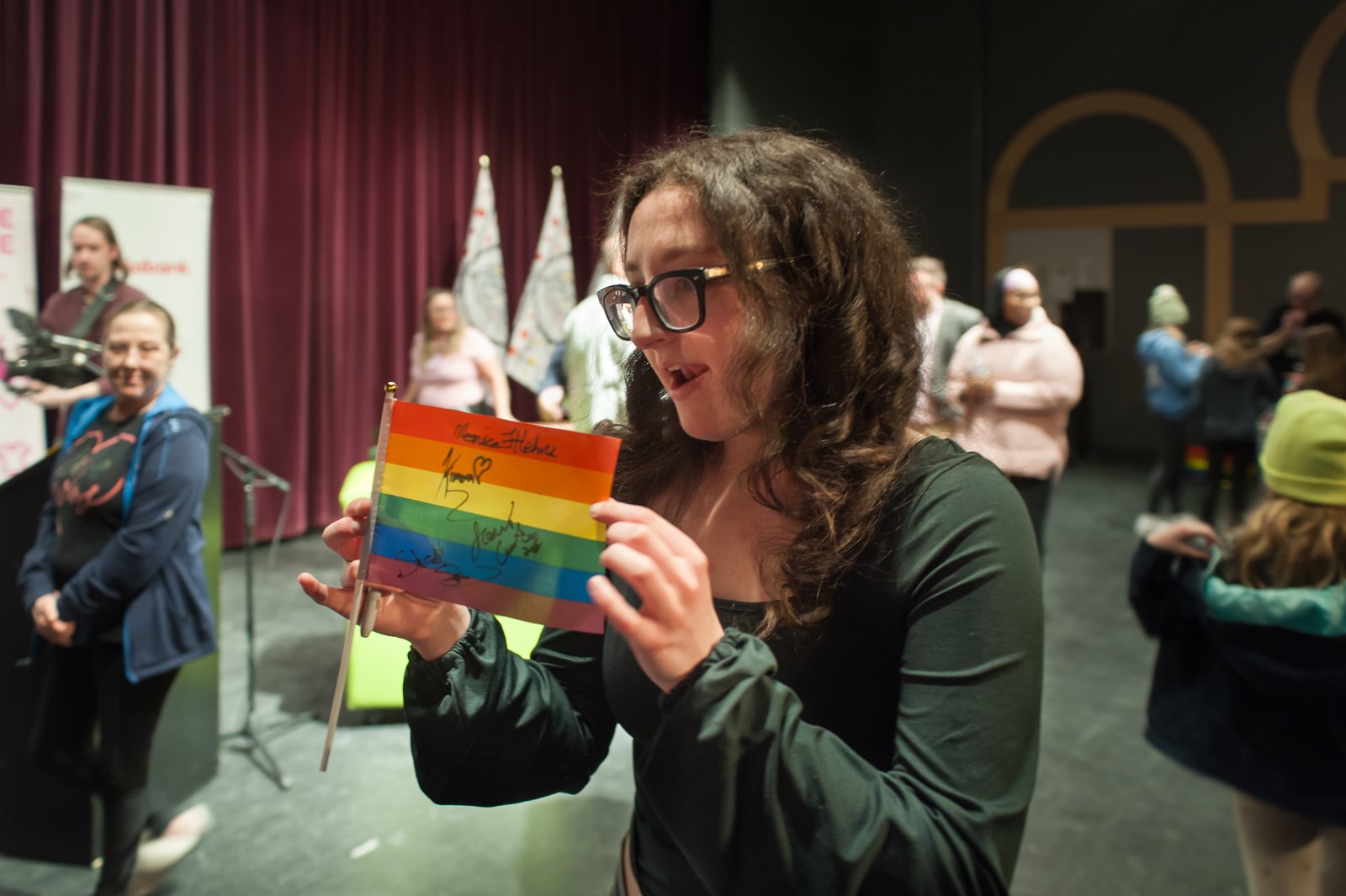
Students are referred through a consultation process involving the student support teams at their own school and at Monterey, so that a placement is a shared decision rather than a transfer.

What We've Accomplished

  • Engaged Grade 6 to 8 students in land-based reciprocal learning focused on identity and community in 2024–25, before the space was formally created.
  • Provided holistic programming centred on relationships and wellness.
  • Established a working group and identified external resources for in-division alternate spaces.
  • Defined target audience as division–outplaced students needing specialized support.
  • Implemented land-based programming for student enrichment.
  • Built a wraparound family support approach in partnership with The Link and Spirit Horse.
  • Provided holistic student support including after-school programming, meals, and family activities.
Students learning outdoors on the land

What We Are Learning

Evidence we are watching
  • Attendance change for Monterey students against their own prior years
  • Successful supported transitions back to home schools, the action's core purpose
  • Caregiver-reported change in independence and engagement
Public evidence
What we are learning

Engagement is not effort alone. Students named it themselves: sometimes it is not 'I don't want to do this' but 'I cannot do this.' Change the environment and what is possible changes. Attendance moved before any curriculum did.

What needs attention

The program is built, staffed and running, and students who had stopped coming to school are coming to this one. That is what the stage reflects, and it is worth being precise about what it does not reflect. The measure that matters most is now being taken: the rate at which students make a supported return to their home school. That is the action's stated purpose. What cannot be reported here is the number, because the program serves few enough students that publishing a rate would identify them. That constraint is real and it is not an excuse. What the second year owes is a way of reporting the pattern over time that keeps students unidentifiable, so that the model can be judged by the thing it exists to do.

The program is small by design. Twelve high school students took part this year. That is the point rather than a limitation: this is a place for a small number of students who need something a large school cannot give them, and it is worth reading the rest of this card knowing that.

Ongoing

  • Report the pattern of supported returns to home schools over time, in a form that keeps a small number of students unidentifiable.
  • Measure the program’s impact rather than its activity: what changes for a student who spends time here, and whether it holds after they leave.
Action 3.6 icon

Action 3.6

Enhance Project-Based Learning, Arts Education, Practical Arts, Active Healthy Living, Technical Vocational Education, Apprenticeship, Adult Education, and Career Development offerings, their connection to each other and to all classrooms.

In plain termsStrengthen hands-on learning: the arts, the trades, shop and foods classes, physical activity, apprenticeship and career planning, and connect them to the rest of school.

Developing
What Has Changed

Propel, the division's award-winning interdisciplinary PBL program, has expanded to the division's two French Immersion high schools. Industrial Arts and Human Ecology now reach Grades 5–6 through Middle Years Exploration.

Read the full picture
Award-Winning PBL

The Propel program offers an interdisciplinary, project-based learning environment where students earn multiple credits while pursuing their interests. It won the Premier’s Award in 2020 and now runs in one English high school and two French Immersion high schools.

An External Review, Delivered

In January 2025 the division engaged KPMG to review two things together: the Human Ecology and Industrial Arts courses taken by Grade 7 to 12 students, and the certificate and Level 1 apprenticeship programs at the Louis Riel Arts & Technology Centre. The review was commissioned in support of this plan, and of this action in particular.

It asked three questions. Whether the division’s current and prospective programming lines up with what Manitoba’s labour market actually needs. Whether it matches what students are choosing. And whether it can be sustained on the funding available. To answer them, KPMG analysed labour market demand, compared LRSD’s offerings against ten other institutions, and examined the cost of delivery and how it is funded.

The final report went to the Board of Trustees in May 2026. It is an internal report and its findings are not published here. Deciding what to do about them belongs to the incoming leadership team.

What We've Accomplished

  • Launched Propel for interdisciplinary PBL credits in English or Français, ICT, Career Development, and PE.
  • Expanded Propel to French sites in 2024.
  • Won the Premier’s Award for Propel in 2020.
  • Expanded Industrial Arts and Human Ecology programs to Grades 5–6 through Middle Years Exploration.
  • Commissioned an external review of Practical Arts and Arts & Technology Centre programming, covering labour market alignment, comparison against ten other institutions, and the cost of delivery. The final report went to the Board of Trustees in May 2026.
Students at an LRSD gathering

What We Are Learning

Evidence we are watching
  • Propel enrolment and credit completion, English and French Immersion sites
  • Findings of the completed KPMG programming review of Practical Arts and the Arts & Technology Centre (internal)
  • Evidence across all eight areas this action names. Adult education, apprenticeship, career development, Active Healthy Living and the arts carry no measure today.
Public evidence

Opens that dashboard in a new tab. On a phone, turn it sideways.

Grade 9 credit attainment counts credits earned in two core courses: ELA & Math. It does not separate out Practical Arts, apprenticeship or Arts credits, so it shows whether students are on track rather than whether this action is working.

What we are learning

The programs gathered under this action look unrelated until you name what they share. Propel, the shop and foods classes now reaching Grades 5 and 6, apprenticeship, adult education and career development all rest on the same conviction: that students learn best when they are doing real work that matters to them and to somebody else. That is one idea, not eight programs, and saying so is what lets them strengthen each other.

The second lesson is about the limits of evidence. An external review of Practical Arts and Arts & Technology Centre programming is complete and the report is in hand. The decisions it exists to inform are still ahead.

What needs attention

The external programming review is complete. The decisions it is meant to inform, about programs, spaces, and investments, have not yet been made. Bringing the findings to staff and community, and acting on them, is the work ahead. Until those decisions are made, this stays a promise being kept in some places more than others.

Ongoing

  • Decide, with staff and the community, what the programming review means for which programs the division offers, at what scale, and where.
  • Build evidence across the areas this action names that carry none today, so that a future report can say more than Propel and Middle Years Exploration.
Students taking part in a school activity
Back to top ↑
Generosity

Strategic Priority 4

Generosity

7 Actions

Generosity, in the Circle of Courage, is having something worth giving. These seven actions are about what the division gives the community around it, and what it makes possible for students to give. Buildings, full-day Kindergarten, nutrition, and learning with the land are embedded. Active transportation and employment equity are developing, and the teaching pathway for students from underrepresented groups is at its beginning.

4Embedded
2Developing
1Emerging
Action 4.1 icon

Action 4.1

Build safe, modern, and accessible spaces for learning and work in all schools and workplaces, both indoors and outdoors.

In plain termsKeep school buildings safe, in good repair and usable by everyone, and plan and build the new schools a growing division needs.

Embedded
What Has Changed

LRSD 2034 sets out the division's ten-year infrastructure ask in priority order: additions at three high schools, five new schools, five renovations, nine universal access projects, and fifteen system replacements, each with dates against it. Almost all of it requires Manitoba government approval and funding, which is why a plan and a timeline are not the same thing. The stage on this card describes the planning: the dashboards, the ten-year plan, the annual review. It does not describe the buildings.

Read the full picture
A Data-Driven Approach

The Annual School Building Review Dashboard gives the community a comprehensive look at the condition of and demands on every building. These data guide decisions from repainting a classroom to planning major capital projects with the provincial government.

Two Roadmaps

LRSD 2034, the division’s ten-year infrastructure plan, and the Accessibility Plan guide growth, modernization, and access. Together they keep the division making significant steps toward spaces that serve a growing student population and welcome everyone.

Approval Is the Bottleneck

LRSD 2034 is explicit that most of its projects require Manitoba government approval and financial support. It also records projects already approved and still awaiting authorization to proceed. Naming a priority and being able to act on it are different things, and the gap between them is where most of the waiting happens.

What We've Accomplished

  • Published the Annual School Building Review, a dashboard collecting data on the condition of and demands on every building in the division.
  • Published LRSD 2034, a ten-year infrastructure plan setting out additions, new schools, renovations, universal access projects, and system replacements in priority order.
  • Built enrolment projections annually in consultation with Baragar Systems.
  • Sequenced universal access and system replacement projects in priority order across the division.
The Annual School Building Review dashboard

What We Are Learning

Evidence we are watching
  • Dashboard data itself: condition ratings and demand pressure, by school
  • Provincial approval status of the projects LRSD 2034 lists as awaiting authorization to proceed
  • Universal access projects completed against the nine listed in priority order
  • Whether the annual review of LRSD 2034 is published each year, and how project dates move between editions
What we are learning

The plan is unusually candid about dependency. Several of its projections are written as conditionals: if a given approval does not arrive, a stated consequence follows for catchments and for students. That is a useful habit for a public document. It makes clear that infrastructure planning in a growing division is not a list of wishes but a sequence of contingencies, and that the division controls the sequencing rather than the timing.

What needs attention

Every date on this card comes from a single edition of a single document. This card is built on the 2024 to 2034 edition of LRSD 2034, which uses enrolment figures current to December 2024 and revisions made in November 2024. The plan is reviewed annually, and the next update goes to the Board of Trustees in September 2026. Project priorities and dates on this card should be read as that edition's, not as today's, and some will change in September. Relinking to the current edition after that meeting is the fix, and it is the first maintenance task this card carries.

The second point belongs in the open. The division can order its priorities, cost them, and defend them. It cannot approve them. Projects in the plan have carried an approval date since 2022 and were still recorded as awaiting authorization to proceed. Where a school is over capacity while a project waits, the effect lands on students, not on the plan. A student in an overcrowded school, or in one without a washroom they can use, is living inside that gap every day.

Ongoing

  • Advance the priorities in LRSD 2034 in the order the plan sets: additions and renovations at existing schools, new schools in the growing precincts, universal access projects, and system replacements.
  • Publish the annual update to LRSD 2034 so that the community can see how priorities and dates move between editions.
  • Accessibility Plan: guides our work in making indoor and outdoor school spaces safe, modern, and equitable for all students, staff, and community members.

J.H. Bruns Collegiate
Action 4.2 icon

Action 4.2

Expand safe, active, and equitable transportation to and from school.

In plain termsMake getting to and from school safer and fairer, whether a student walks, bikes, rides a school bus or takes transit.

Developing
What Has Changed

The division advocates for improved Winnipeg Transit service and adds fee-for-service school bus routes where needed, with a streamlined process to provide transportation support for families in need.

Starting September 2026, schools will distribute Winnipeg Transit student passes to students in Grades 6-12 through a new provincial initiative.

In partnership with the City of Winnipeg, schools have enhanced safety through improved signage, crossings, and traffic-calming measures. Bike storage is available at every school.

Read the full picture
Connecting Our Communities

The division advocates for service improvements to Winnipeg Transit routes and routinely monitors service changes. Where service is found to be lacking or insufficient, the division adds new school bus routes on a fee-for-service basis, such as the service offered between Bonavista and Sage Creek and J. H. Bruns Collegiate and Collège Béliveau in 2025-2026.

School bus transportation to Practical Arts classes for Grade 7 and 8 students has been expanded to serve more students whose programming takes place beyond walking distance.

A streamlined process has been implemented so that principals can request access to school bus transportation at no cost for families in need.

Beginning in September 2026, schools will distribute Winnipeg Transit student passes to students in Grades 6 to 12, as a result of a new provincial initiative.

Safer on Foot and Bike

Enhanced signage, improved crossings, and traffic-calming measures have been implemented in several school communities, in collaboration with the City of Winnipeg. Bike storage is in place at every school. A new divisional permission form has been developed to facilitate implementation of bike buses.

What We've Accomplished

  • Added new school bus routes in 2024-2025 and 2025-2026 to connect neighbourhoods with limited or no transit service to designated high schools:
    • Bonavista to J. H. Bruns Collegiate & Collège Béliveau
    • Sage Creek to J. H. Bruns Collegiate & Collège Béliveau
    • Waterside Estates to Nelson McIntyre Collegiate
  • Added several bus routes to transport students to Practical Arts facilities located beyond walking distance.
  • Provided information to assist Winnipeg Transit with anticipating route demand to and from schools with Grade 7 to 12 students during 2025 implementation of new primary transit network.
  • Maintained crossing guards and walking school buses to support safe transportation to and from school.
  • Provided bike storage infrastructure available at each school.
  • Supported school-led active transportation: a Bike Repair Night that drew 120 people and tuned up 80 bicycles, and marshal training run by a trustee for parents supporting their children's routes.
  • Improved crossings and traffic safety near schools: new crosswalks at École Sage Creek School, Highbury School and Minnetonka School; flashing beacon crosswalks near École Varennes, École Henri-Bergeron, and École Van Belleghem; installation of in-street school crosswalks signage at École St. Germain and Glenwood, Victor Wyatt, and Frontenac Schools; signage changes and awareness campaigns on Beaverhill Boulevard, Island Shore Boulevard, Sage Creek Boulevard and Autumnwood Road.
  • Assessed the impact of Winnipeg Transit’s June 2025 network reconfiguration on student travel, surveyed families about service gaps, and took the results to Winnipeg Transit with a request for changes.

What We Are Learning

Evidence we are watching
  • Route ridership on the new 2024–25 and 2025-26 service additions
  • Impact of Winnipeg Transit service changes
  • Impact of provincial student bus pass initiative
  • Incident and near-miss data at the newly signed intersections
Public evidence

No public data source yet. Evidence for this action currently lives in internal and board-level reporting. A public dashboard remains an open opportunity for a future Data Hub cycle.

What we are learning

The largest transportation change of this plan was not one the division made. Winnipeg Transit replaced its entire route network on 29 June 2025, the biggest single change in the system’s history, and LRSD spent 2025–26 working out what it meant for students. The division assessed the fall schedule for service gaps as soon as it was published, identified Bonavista and Sage Creek as the neighbourhoods most likely to be affected and J.H. Bruns Collegiate and Collège Béliveau as the schools, surveyed families about what they were actually experiencing, and took those results to Winnipeg Transit. The options considered included adjusting bell times at specific schools and adding paid-seat school bus service to particular neighbourhoods, which the division could contemplate only because contingency had been built into the budget.

The most useful thing this action taught us came from schools rather than from the division. Bike buses now run at five schools, and they started because families and teachers wanted them, not because a divisional plan called for them. When a teacher project team asked why more families were not taking part, the barrier turned out not to be money, distance or infrastructure. It was a permission form: there was no way for a student to ride without a parent alongside. Drafting one form removed it.

That is worth naming as a pattern rather than as an anecdote. Community-initiated solutions often find barriers that divisional planning cannot see, because the people living with a barrier notice it first. In those cases the division's job is smaller than it expects and faster than it is used to being.

What needs attention

What is still outstanding is the harder infrastructure work the division does not control alone: traffic calming, drop-off and pick-up routines, and crossing supports that depend on the City of Winnipeg. Most of the roads, traffic lights and crosswalks students travel on belong to the City, not to the division, which is why this part of the work moves at the pace of a partnership rather than a decision.

The transit reconfiguration showed the limit plainly. The division could survey families, advocate, and pay for school bus service it had not planned to buy. It could not change a bus route. Where a student’s route to school depends on the City, the division’s role is to make the case and to fill gaps at its own cost.

Ongoing

  • Identify and reduce barriers to active transportation by working with community partners and families and promoting successful strategies implemented in various schools.
  • Expand walking school bus, bike bus, and bike rider safety training programs.
  • Add bike storage infrastructure (bike racks, bike cages).
  • Improve signage.
  • Review drop-off and pick-up routines.
  • Install traffic-calming measures.
  • Add crossing guards and/or school patrols at key crossings.
  • Conduct awareness campaigns.
  • Highlight connection between safe, equitable, and active transportation and UN Sustainable Development Goals.
  • Expand school bus service to provide safe, reliable, and equitable transportation for students in Grades 7 to 12 where convenient transit service is not available.
  • Work with families to identify solutions when transportation challenges impact school attendance.
Action 4.3 icon

Action 4.3

Implement universal full-day Kindergarten and enhance access to before-and-after school care.

In plain termsFull-day Kindergarten for every child, and more supervised, affordable options for the hours before and after the school day.

Embedded
What Has Changed

Full-Day, Every-Day Kindergarten runs in all 31 LRSD schools that offer Kindergarten, and the first full cohort has now completed Grade 1: among Grade 1 teachers able to compare, 71 per cent reported a positive overall impact, consistent across English and French Immersion. On the supervision side, BLAST (Before-School, Lunch, and After-School Time) completed its first year as a coordinated program: seven locations serving eight schools, 202 students enrolled, and more than 250 on a division-wide waitlist. Licensed childcare spaces also expanded, including the new centre at École Mazina-Giizhik.

Read the full picture
A Strong Start for Every Student

Thanks to a local taxpayer investment, Full-Day, Every-Day Kindergarten runs in all 31 LRSD schools that offer Kindergarten. Students get a stronger foundation and more learning time; working families get nurturing, engaging, full-day programming.

BLAST

The 2023 plan’s wording for this action is “before-and-after school care”. BLAST is a supervision program rather than licensed childcare, and this action covers both. BLAST (Before-School, Lunch, and After-School Time) completed its first year as a coordinated, division-wide program: seven locations serving eight schools, more than 200 students enrolled, and over 250 on a division-wide waitlist. BLAST is a supervision program, not licensed childcare, and is designed to complement existing childcare services, not replace them. The goal is before- and after-school supervision in half of LRSD communities by January 2027, through new BLAST locations and childcare partnerships.

Partnering to Expand Licensed Childcare

LRSD collaborates with childcare partners and the provincial government to expand licensed before- and after-school spaces, open new centres, and explore prefabricated facilities, creating more options for families.

What We've Accomplished

  • Launched Full-Day, Every-Day Kindergarten in full swing as of September 2024.
  • Completed classroom configurations to accommodate full-day classes.
  • Purchased necessary materials and equipment.
  • Conducted community consultation, particularly focusing on space concerns in École Sage Creek School, Island Lakes Community School, and École Van Belleghem.
  • Ensured that no childcare spaces were lost due to implementation of Full-Day, Every-Day Kindergarten.
  • Consulted with childcare partners and Department of Education's Early Childhood Learning division to create more spaces.
  • Expanded before- and after-school licensed childcare spaces at five schools: École Henri-Bergeron, École Provencher, Samuel Burland School, Highbury School, and École Guyot.
  • Opened a childcare centre with a childcare provider in École Mazina-Giizhik, the new French Immersion school serving Sage Creek and Bonavista.
  • Continued discussions about adding prefabricated childcare facilities, with plans for two 104-space centres and two 40-space centres.
  • Brought together partners to incorporate land-based education in early childhood learning, including licensed childcare.
A teacher working with students

What We Are Learning

Evidence we are watching
  • Spring 2026 Grade 1 teacher survey (66 respondents, 58 comparable): readiness for structured literacy 79 per cent, quicker adaptation to Grade 1 expectations 77 per cent, earlier identification of learning needs 77 per cent, stronger belonging 76 per cent
  • BLAST enrolment against demand: 202 enrolled, 250+ waitlisted; Spring 2025 family survey found 1,200+ families with unmet supervision need
  • Progress toward before- and after-school supervision for half of LRSD communities by January 2027
Public evidence
What we are learning

Conditions matter more than the program alone: teachers were explicit that FDK's gains depend on class composition, student needs, access to support staff, and broader social factors. And BLAST's 250-student first-year waitlist is a finding, not a footnote: demand for before- and after-school supervision exceeds supply everywhere it opens.

The survey was also clear about where the gains stop. Sustained engagement and emotional regulation showed mixed results, with only about half of teachers reporting that students sustained engagement longer. A full extra year of school does not automatically produce every kind of readiness, and knowing which gains it does and does not produce is more useful than a single satisfaction figure. An SCST action group is now working on exactly that gap, on sustained engagement and emotional regulation in the early years.

What needs attention

The outcome evidence is an internal teacher survey rather than the independent third-party review this plan originally named. That review has been superseded: the annual internal survey is now the measure. It is a defensible choice and a real limitation at the same time, and these findings should be read knowing the division evaluated its own program. The conditions finding is already generating a response: an SCST action group will interview FDK teachers, guided by RAF data and Classroom Complexity Scores, with dates still to be set and two professional learning days already scheduled for November 2026 and March 2027. BLAST expansion must also solve space, split-shift staffing, and supports for students with additional or complex needs.

Ongoing

  • Continue the annual Kindergarten teacher survey as the ongoing measure of Full-Day, Every-Day Kindergarten outcomes, and find a way to hear from families alongside it.
  • Bring together Kindergarten teachers to share best practices and enhance capacity.
  • Improve access to childcare centres.
  • Reach before- and after-school supervision for half of LRSD communities by January 2027, through new BLAST locations and childcare partnerships.
  • Build more support into BLAST for students with additional needs.
  • Pursue third-party funding for BLAST.
  • Lower BLAST fees and widen access, so that cost is not what decides which families can use it.
  • Continue collaborating with childcare partners to expand supervision and licensed childcare spaces.
  • Continue to bring partners together to incorporate land-based and play-based learning in early childhood, including in licensed childcare.
Students in a classroom
Action 4.4 icon

Action 4.4

Implement a universal nutrition program.

In plain termsFood at school for any student who wants it, with no forms, no fees and no way for anyone to tell who needed it.

Embedded
What Has Changed

The program delivers from the RDC commissary kitchen across the division, and demand has kept climbing: orders grew more than 375 per cent during the initial implementation phase, activity is up roughly 29 per cent year over year, and the first week of January 2026 alone exceeded the average monthly volume of the entire 2024/25 school year. Schools with food permits rose from 10 to over 50 per cent in the program's first four months.

Read the full picture
Nourishing Our Community

The Universal Nutrition Program launched in September 2024 across all LRSD schools. Every one of the 41 schools has access to food for students, without barriers or stigma. The commissary kitchen at the René Deleurme Centre now delivers fresh food to the 27 schools holding on-site food preparation permits.

Scaling Up for Success

The division reviewed its infrastructure, hired a delivery driver, and grew the share of schools with food preparation permits from 10 per cent at launch to 27 of 41 schools, meeting the 65 per cent target. The commissary prepares roughly 1,000 sandwiches, 2,000 muffins, and 500 pieces of Bannock weekly, with a focus on local sourcing and sustainability.

What We've Accomplished

  • The Manager of the Universal Nutrition Program visited every school: first in February 2024 to inventory equipment and resources, then from September to November 2024 to determine what each school needed and to help schools obtain the food permits that expand what they can offer.
  • Increased schools holding food permits from 10 per cent in September 2024 to over 50 per cent by 1 December 2024, and to 27 of 41 schools since.
  • Built and ran the commissary kitchen at the René Deleurme Centre, hired a divisional delivery driver, and grew from a four-school pilot to weekly averages of 1,000 sandwiches, 2,000 muffins, 500 pieces of Bannock, 300 breakfast sandwiches, and 300 vegetable platters.
  • Identified schools needing greater access to nutritious meals and began designing and scheduling kitchen upgrades and renovations.
  • Built menus aligned with provincial dietary guidelines around fresh, locally sourced ingredients that accommodate diverse dietary needs, in partnership with local farms and businesses, including a Manitoba producer supplying omega-3-rich eggs from a free-run aviary system.
  • Used the kitchen as a training place as well as a production place: LRSD high school students gain hands-on food preparation experience and employment readiness there, and community volunteers develop English language skills alongside them.
  • Reduced waste through commercial dishwashers in 11 schools with 13 more planned, biodegradable or recyclable packaging where dishwashers are not yet installed, bulk ingredient purchasing, and milk machines in several schools.
  • Built food literacy into classroom learning, including a banana-themed week at Frontenac School where Grade 7 and 8 student leaders worked with Teacher-Librarian Elena Stangherlin on where food comes from, what it does for the body, and what happens to what we waste.
  • Modernized kitchens at Frontenac School, Marion School, Victor H.L. Wyatt School, Victor Mager School, École Henri-Bergeron and École Varennes, with partial upgrades at St. George School and Lavallee School, supported by $349,188 of direct divisional investment alongside Child Nutrition Council of Manitoba, provincial and federal contributions. Three more schools are scheduled within the next twelve months.
  • Upgraded from domestic to commercial equipment, including combi ovens with built-in temperature monitoring and step-by-step recipe guidance, so that food safety is built into the machine rather than added on top of it.
  • Extended the program year-round, including Summer Academy and ASPIRE, with 10,000 food items delivered in July alone.
  • Began transitioning to a fully Halal menu and eliminating menu stratification, so that students across the division share the same food rather than different tiers of it.
  • Built the commissary into a procurement hub working with Manitoba producers, Indigenous-owned businesses and national partners, and commissioned products designed for specific student needs, including portion-adjusted hummus and sensory-friendly smoothies for neurodivergent learners.

  • Developed a reliable supply chain with centralized ordering, twice-weekly deliveries and traceability from factory to school for rapid recall response, carrying order volumes from 905 cases in September to 2,973 in October.
Students at an LRSD gathering

What We Are Learning

Evidence we are watching
  • Food permit coverage, against a 65 per cent target
  • Year-over-year order growth (roughly 29 per cent; January 2026's first week exceeded the 2024/25 monthly average)
  • Dishwasher and packaging installations reducing single-use plastic
Public evidence

Program data (orders, permits, participation) is not yet public; it lives in internal and board-level reporting. The pages above describe how the program works and who funds it.

What we are learning

Reaching two-thirds of schools this fast means the constraint was never demand, it was kitchen infrastructure. That's a specific, useful finding: the barrier to feeding more students was physical capacity, not interest or need. The program is also becoming a belonging engine: purpose and attendance effects are appearing before any formal evaluation.

What needs attention

The experience evidence this field was waiting for is starting to arrive: an attendance turnaround at Victor H.L. Wyatt tied to a student's nutrition-program role, student-led monthly service at St. George, the co-op Sandwich Crew at Dakota, barrier-free access serving 300+ students daily at Glenlawn. What is still missing is a systematic feedback loop; the stories are real but not yet a measure. A systematic loop would mean someone collecting student and family feedback on a set schedule, at every school rather than only the schools that offer it, and reporting the result publicly the way permit coverage is reported. None of those three pieces exists yet.

There is a second thing universal access cannot tell us, which is who is actually eating. Access is equal by design. Participation may not be, and nothing currently measures it.

Ongoing

  • Routinely train staff in food safety and meal service protocols, ensuring at least two staff per school are certified in WHMIS and Food Handling.
  • Upgrade identified school kitchens to enhance food service capabilities.
  • Enhance menus and service quality based on feedback from students, parents, and staff.

  • Optimize logistics and inventory processes using feedback collected.
  • Increase student satisfaction and participation, measured through data collection.
  • Expand food literacy and sustainability education.
  • Engage parents through feedback, volunteer opportunities, and education sessions.
  • Develop and regularly update culturally diverse menus that reflect student population.
  • Use nutritional assessments and focus groups to demonstrate positive impacts on health and learning outcomes.
  • Continue expanding food preparation permits beyond the 27 schools that now hold them.
  • Monitor long-term outcomes on student health, attendance, and academic performance.
  • Complete kitchen renovations in targeted schools.
Action 4.5 icon

Action 4.5

Involve the whole school in learning and teaching about the United Nations' Sustainable Development Goals and the United Nations Declaration on the Rights of Indigenous Peoples, with an emphasis on Indigenous worldviews and land-based education.

In plain termsLearn about caring for the planet and about the rights of Indigenous Peoples, through the land itself and through projects students lead.

Embedded
What Has Changed

An Indigenous Land-Based Education Course is running at Windsor Park Collegiate, rooted in UNDRIP. Schools are engaging with the SDGs through International Development Week, recycling and food security initiatives, and student-led competitions. The second annual Learning with the Land gathering (May 21) capped a year of coordinated classroom inquiry, with student-led projects documented in more than 30 schools, from water chemistry micro-ecosystems and food forests to composting programs and clothing swaps.

Read the full picture
Learning with the Land

The second annual Learning with the Land: A Gathering to Celebrate and Dream brought students to The Forks on 21 May 2026. The gathering was the culmination of a year of classroom inquiry across the division: professional learning on the United Nations Sustainable Development Goals and UNDRIP, followed by student-led projects in more than 30 schools, from bike buses, composting, and clothing swaps to water chemistry, star blankets, and food forests. Students led the learning, presenting projects and guiding conversations alongside community partners.

Rooted in UNDRIP

These are two different things, and this action treats them as connected rather than as the same. UNDRIP is about the rights of Indigenous Peoples, including the right to self-determination. The Sustainable Development Goals are global goals for a more just and sustainable world. In LRSD they meet on the land, which is where both are learned. An Indigenous Land-Based Education Course at Windsor Park Collegiate is rooted in the framework of UNDRIP. A divisional SharePoint page supports educators with resources, and experiential land-based programming reaches middle years students across the division.

What We've Accomplished

  • Initiated pilot program Indigenous Land-Based Education Course at Windsor Park Collegiate, rooted in framework of UNDRIP and centred on Indigenous pedagogies, worldviews, and experiential learning.
  • Created divisional SharePoint page focused on UNDRIP resources, including materials to support educators in integrating UNDRIP into their teaching practices.
  • Developed Indigenous land-based experiential programming for Grade 6–8 students, focusing on land-based activities and student wellness.
  • Initiated discussions with various learning communities across school division to enhance awareness and understanding of UNDRIP.
  • Participated in International Development Week activities, aligned with United Nations' Sustainable Development Goals 1, 4, and 17.
  • Implemented several school-level recycling and food security initiatives, aligned with goals 1, 2, 4, and 12.
  • Participated in "GO FOR THE GOALS" challenge in January 2024, with Grade 8 student from Nordale School winning provincial contest and being honoured at legislative building in presence of Lieutenant Governor of MB and Premier as part of International Development Week, Feb 4-10, 2024, sponsored by Manitoba Council for International Cooperation, aligning with goals 4, 8, 11, 12, 16, and 17.
  • Made connections with an Education Specialist at the Manitoba Council for International Cooperation in 2024, who provided Global Goals materials and a professional development presentation.
  • Recognized importance of water and electricity resources in current LRSD land acknowledgement, which are drawn from areas inside and outside Treaty One, aligning with goals 4, 6, 7, 8, 11, and 16.
  • Took part in strength in the Canadian Museum for Human Rights’ Be an Upstander program. The Museum runs its national showcase each May and the division runs its own alongside it, connecting the two so that student work made here reaches the Museum’s galleries and the people who visit them.
  • Divisional data governance charter integrates principles of Indigenous data sovereignty.
Land-based learning outdoors

What We Are Learning

Evidence we are watching
  • Schools reporting active programming aligned to the Sustainable Development Goals and to UNDRIP
  • Land-based course enrolment and expansion beyond the Windsor Park pilot
Public evidence

Opens that dashboard in a new tab. On a phone, turn it sideways.

What we are learning

The division's own text names its gap plainly: the connections between land-based learning and specific Global Goals (12, 13, 14, 15) 'could be made explicit and strengthened.' That's a real, self-identified finding. The work is happening, but its framing hasn't caught up to it. The second year added another: when students lead the learning rather than participate in pre-designed activities, in the staff's words, it hits that much harder.

What needs attention

The school-by-school picture named as a gap now effectively exists: the Learning with the Land project record documents active work in more than 30 schools. That did not happen by invitation alone. Each school designated a Learning with the Land leader who attended five professional learning days across the year, and teacher-led Keewatin projects carried three pieces of work division-wide. The next step is turning that annual snapshot into an ongoing record. The larger decision is whether the leader structure that produced it continues. Thirty schools did this work because someone in each building was named to carry it and given five days across the year to learn. If that structure ends, the record will show what one year of designated leadership produced rather than what the division does every year.

Ongoing

  • Expand and extend land-based education programs beyond pilot initiatives to include more schools and grade levels.
  • Collaborate with School and Classroom Support Team (SCST) teachers to integrate the principles of UNDRIP and the Sustainable Development Goals into their work across the division.
  • Continue to build and maintain divisional SharePoint page with robust collection of UNDRIP-related and land-based facilitator resources.
  • Expand dialogue with learning communities on how to implement land-based and experiential learning tied to UNDRIP principles.
  • Work toward shared understanding and application of reconciliation in daily operations and long-term planning.
  • Make the connection between land-based learning and the Global Goals explicit and embed it in policy, beginning with the goals on climate, responsible consumption, and life on land and in the water.
  • Conduct "Voluntary Local Review of Progress" to understand more fully ways that LRSD works to achieve Global Goals, following guidelines from United Nations.
Students and staff learning on the land
Action 4.6 icon

Action 4.6

Fulfil the aspirations, protocols, and practices of the Employment Equity Policy.

In plain termsHire and support staff in a way that removes barriers, so that over time the people who work in LRSD better reflect the students they serve.

Developing
What Has Changed

Policy GBA is adopted. Leadership completed mandatory bias-in-hiring training, interview questions are standardized, and the division has active partnerships with CCDI and CAHRD. An on-staff Knowledge Keeper is in place.

Read the full picture
An Inclusive Foundation

A new Employment Equity Policy is in place, with mandatory training for the leadership team on bias in hiring. Standardized interview questions and refined job posting language embed diversity, equity, and inclusion into employment practice.

Partners in the Work

LRSD partners with the Canadian Centre for Diversity and Inclusion (CCDI) and the Centre for Aboriginal Human Resource Development (CAHRD), and advocates at the provincial level to remove barriers for internationally educated teachers.

What We've Accomplished

  • Hosted accessibility forum to engage community in ongoing dialogue.
  • Advocated and participated in provincial committees to address barriers to employment for internationally educated teachers.
  • Removed barriers for employees who are educational assistants in division but also internationally educated teachers, both with and without permanent Manitoba certification.
  • Mandated training for leadership team specifically around bias and hiring in spring 2024.
  • Offered optional anti-racism learning for the leadership team through the "Polarizing Conversations" workshop.
  • Trained staff and implemented accessibility measures (e.g., tools on website).
  • Created Policy GBA – Employment Practices: Diversity, Equity, and Inclusion and Employment Practices – Admin Protocol in collaboration with community and various employee groups.
  • Standardized teacher interview questions to draw on indicators identified in policy, division's mission and vision, and 2023-2027 MYSP.
  • Refined language on job postings to make them more inclusive and reflective of divisional values.
  • Developed, implemented and revised policies through an equity lens.
  • Partnered with Canadian Centre for Diversity and Inclusion (CCDI) to strengthen divisional practices and provide resources.
  • Partnered and consulted with religious bodies to broaden divisional perspectives around religious leaves and accommodations (e.g., Manitoba Islamic Association and prayer spaces).
  • Partnered with Centre for Aboriginal Human Resource Development (CAHRD) and Community-based Aboriginal Teacher Education Program (CATEP).
  • Completed feasibility study with Université de Saint-Boniface and Bureau de l'éducation française on an in-service training program that would enable French-speaking Educational Assistants to become certified teachers.
  • Hired on-staff Knowledge Keeper to develop, sustain, and support Indigenous initiatives.
  • Published "Creating a Culture of Diversity, Equity, Inclusion and Anti-Racism in the Louis Riel School Division," which explores ways staff are coming to strengthening equity and inclusion practices.
  • Developed voluntary employee Ethnocultural Survey in consultation with staff, members of racialized communities, and division's various unions.

What We Are Learning

Evidence we are watching
  • Ethnocultural Survey participation (currently voluntary)
  • Standardized interview question use across hiring
Public evidence

No public data source yet. Evidence for this action currently lives in internal and board-level reporting. A public dashboard remains an open opportunity for a future Data Hub cycle.

What we are learning

The order of the work turned out to matter. The division built the policy, the training and the hiring practices first, and is only now building the means to tell whether any of it is changing who gets hired. Establishing the measure alongside the practices would have been the stronger sequence, because a commitment about representation needs a count from the outset rather than once the practices are settled.

The second thing we have learned is why that count is hard. The Ethnocultural Survey was developed with staff, with members of racialized communities and with each of the division's unions, and it is voluntary. Self-identification runs on trust rather than on a field in a form. A person decides whether to tell an employer who they are based on what they expect the employer will do with it, which means the measurement problem and the equity problem are the same problem.

What needs attention

The division cannot yet say whether its workforce is coming to reflect the students it serves. Ethnocultural data is not attached to employee profiles or applications, so the measurement that would answer the question does not exist. That is the real limit on this action. The policies, the training and the hiring practices are in place. The outcome they exist to produce is unmeasured, and until it is measured this stays a promise being kept in some places more than others.

Ongoing

  • Attach ethnocultural data to employee profiles and/or applications to remove barriers to self-identifying.
  • Implement an Employee Centre that lets staff update their own information, including gender identity and ethnocultural identity, removing barriers built into the current system.
  • Include self-declaration as part of recruitment process.
  • Relaunch the Immigrant Teacher Education Program with the University of Winnipeg, so that internationally trained teachers already working in our schools have a route toward Manitoba teacher certification.
  • Launch public Staff Diversity Dashboard that emulates Student Diversity Dashboard.
  • Collect data on school-based professional learning in anti-racism, equity, decolonization and inclusion.
  • Implement strategic plan that addresses recruitment (language in new teacher collective agreement).
  • Build a staff body that better reflects the student population it serves.
  • Establish yearly review committee for Policy GBA.
  • Provide ongoing professional development for leaders.
  • Implement mentorship programming.
Action 4.7 icon

Action 4.7

Implement a program that supports students from historically oppressed, marginalized, and underrepresented groups to complete two post-secondary degrees and start their teaching career in LRSD.

In plain termsHelp students from groups that are underrepresented in teaching earn their degrees and come back to teach in LRSD.

Emerging
What Has Changed

A federal grant funded a feasibility study on a pathway for French-speaking educational assistants to earn teaching certification. Findings have been shared with Université de Saint-Boniface and the Bureau de l'éducation française.

Read the full picture
Funded and Studied

A federal grant from the French Second Language Revitalization Program funded a feasibility study on a pathway for French-speaking educational assistants to earn their teaching certification and start their careers in LRSD.

Partners at the Table

The findings have been shared with the Division scolaire franco-manitobaine, Université de Saint-Boniface, and the Bureau de l’éducation française to collaborate on program development and clear pathways for aspiring educators.

What We've Accomplished

  • Applied for and received federal grant from French Second Language Revitalization Program.
  • Hired consultants to conduct study on post-secondary program for French-speaking educational assistants to earn professional teaching certification.
  • Shared findings with Division scolaire franco-manitobaine, Université de Saint-Boniface, and Bureau de l'éducation française.
Students at Collège Jeanne-Sauvé

What We Are Learning

Evidence we are watching
None yet, and appropriately so: this is a feasibility study, not a program. The indicator to define now is the actual launch date.
Public evidence

No public data source yet. Evidence for this action currently lives in internal and board-level reporting. A public dashboard remains an open opportunity for a future Data Hub cycle.

What we are learning

The learning here is about the distance between a commitment and a first step. Four years in, the most substantial thing this action has produced is a study, and the study is about employees rather than students. That is still meaningful groundwork. A French-speaking educational assistant who already works in our schools, already knows our students and already speaks the language of instruction is the shortest route into a French Immersion classroom that exists, and starting there is sensible.

But it is a different promise from the one the plan made, and that difference should be visible rather than smoothed over. What the study actually found has not been shared, so this card cannot say what barriers those educational assistants face. Until it is, the honest description of this action is that it has a funded beginning and a set of intentions that do not yet form one pathway: an Educational Assistant diploma for Grade 11 and 12 students, information evenings, alumni tracking and a CATEP connection are four starting points rather than a single route a young person could follow.

Two pathways have been running for years and belong in this account. The Community-based Aboriginal Teacher Education Program is a joint venture between the University of Winnipeg’s Faculty of Education, Manitoba Entrepreneurship, Training and Trade, and partner school divisions. It lets Indigenous educational assistants earn an integrated Bachelor of Arts and Bachelor of Education while working full-time in an LRSD school: classes in the evenings from September to April, released to the university and to full-time student teaching from May to July, about six years in all. An LRSD educational assistant completed it in 2023 and took a Grade 2 and 3 teaching position in the division that June. The Immigrant Teacher Education Program, a joint venture between the University of Winnipeg’s Faculty of Education and partner school divisions, does the same work for internationally trained teachers who have not been able to establish themselves in a Manitoba classroom. LRSD’s partnership with CATEP continues. Its partnership with ITEP has not been sustained. Neither is enough on its own to answer the promise this action makes.

What needs attention

This is a funded feasibility study, not yet a program. Nothing here should be read as evidence that the program itself is succeeding, because it doesn't exist yet.

The second gap is worth naming just as plainly. The 2023 plan commits to a program for students from historically oppressed, marginalized and underrepresented groups. The funded work so far is a feasibility study for current employees, specifically French-speaking educational assistants. Both matter, and they are not the same promise. The student-facing program still needs to be designed, and no date has been set for a first cohort. That decision belongs to the incoming leadership team.

Ongoing

  • Launch post-secondary program for French-speaking educational assistants in partnership with Université de Saint-Boniface and Bureau de l'éducation française.
  • Collaborate with Université de Saint-Boniface to offer Grade 11 and 12 students opportunity to obtain their Educational Assistant Diploma.
  • Host annual information evenings to engage and encourage high school students to pursue studies in Faculty of Education.
  • Establish formal system to track LRSD alumni's post-secondary choices and trends.
  • Connect Indigenous Youth Leadership students with CATEP program at University of Winnipeg.
  • Design the student-facing program the 2023 plan committed to, and set a date for a first cohort. That decision belongs to the incoming leadership team.
Back to top ↑

What Comes Next

Looking Ahead

The Multi-Year Strategic Plan is not a project with an end date. It is part of an ongoing effort to create conditions in which students, staff, families, and communities can flourish.

Three questions come out of this cycle rather than out of the idea of planning, and they are the ones worth carrying into the next one:

  • Where have we trained without embedding? Several actions on this page have the professional learning in place and not yet the daily routine that would make it stick.
  • Where have universal approaches still left particular groups behind? Making something available to everyone is not the same as it reaching everyone.
  • What took longer than the plan expected, and what does that tell us about how to design the next one?

This page is where the answers start. As of July 2026, twelve of the twenty-five actions are Embedded, nine are Developing, and four are Emerging, and each card names what still needs attention.

In 2026–2027, LRSD will need to take stock again, as it did in 2023: looking carefully at what has been accomplished, what still requires attention, and what new possibilities are emerging. That process will be built in community, with community, and for community. The work reflected on this page will help inform the development of the MYSP 2027–2031.

Where to Watch the Data

Most of the evidence behind this plan is public. The LRSD Data Hub gathers twelve dashboards and a Data Governance and AI Overview; each action card above links to its sources under Public evidence in the Learning tab. This index runs the other way: start from a data source and find the actions it serves. Each link below opens its dashboard in the Data Hub in a new tab. On a phone, turn it sideways.

The data does not all point one way. The dashboards show declines as well as gains: reading and writing proficiency in Grades 1 through 8 have slipped over the decade, and regular attendance has not recovered its pre-pandemic levels. We link to them anyway.

Back to top ↑

Plain Language

Words We Use

Schools have their own vocabulary, and it can shut people out. Some of it is on this page because it is the official wording of the plan, and some because it is genuinely the clearest word for the thing. Either way, nobody should have to already work here to read this. If a word on this page is not explained below, that is a gap and we would like to hear about it.

Words about this plan
School division
The public body that runs a group of schools in a defined area. LRSD runs 41 schools in south-east Winnipeg.
Trustee
A person elected by the community to govern the school division. LRSD has nine, elected every four years alongside the Winnipeg civic election.
Divisional, division-wide
Applying to all LRSD schools rather than to one school.
Multi-Year Strategic Plan (MYSP)
The four-year plan that says what the division is trying to do and how it will know whether it is working. The current one runs 2023 to 2027.
Priority
One of the four big commitments the plan is organized around: Belonging, Mastery, Independence and Generosity.
Belonging, Mastery, Independence, Generosity
The plan’s four priorities, and also the four needs at the centre of the Circle of Courage, a model of healthy development drawn from Indigenous child-rearing philosophy. Belonging is being known and welcome somewhere. Mastery is getting good at something. Independence is having a say in your own life. Generosity is having something worth giving.
Co-stewardship
Named in the plan as a commitment to all staff. It means the people who do a piece of work have a real say in how it is decided and how it changes, rather than being told afterwards.
Anti-racist, anti-oppressive
Anti-racist means actively working to remove racism from how a system operates, which is more than avoiding racist acts. The division’s 2022 report Creating a Culture of Diversity, Equity, Inclusion and Anti-Racism describes what this looked like under the previous plan. Anti-oppressive applies the same test to every form of exclusion the plan names, including sexism, classism, ableism and heterosexism. Both describe something an organization does rather than something it believes.
IBPOC
Indigenous, Black and People of Colour. Used on this page when reporting how students describe themselves.
Strategic action
One of the 25 specific promises inside the plan. Each one has its own card on this page.
Emerging, Developing, Embedded
The three stages used on this page to describe how far along an action is. Full definitions are in the introduction at the top.
Data Hub
A public LRSD website holding twelve dashboards of divisional data, such as attendance, enrolment and provincial assessment results.
Annual Report to the Community (ARC)
The division's yearly account of its work, published each summer. Past reports are linked at the top of this page.
Street data
Evidence gathered close to the ground: what students, families and staff say about their own experience, collected by the people who work alongside them every day. It is treated here as primary evidence, not as anecdote filling space until numbers arrive.
Asset mapping
Beginning from what a community already has, including its people, organizations, spaces and skills, rather than from what it lacks, and recording it so the work can build on it.
Words about teaching and learning
Curriculum
What students are expected to learn in a subject. In Manitoba it is set by the province.
Outcomes
In a school context this usually means the specific things a curriculum says students should be able to do, not results.
Assessment
Any way a teacher finds out what a student has learned.
Formative and summative assessment
Formative happens during learning and is meant to guide the next lesson. Summative happens at the end and is meant to sum up what was learned. Both can be outcomes-based.
Outcomes-based assessment
Judging a student against what the curriculum says they should be able to do, rather than against an average of the marks they collected along the way.
Dynamic assessment
Assessment that changes as the student does. What counts is the most recent and most consistent evidence of what a student can do now, not their first attempt.
Screening
A short, standard check given to every child at the same point, to spot who may need extra help. It is not a diagnosis and it is not a mark.
Progress monitoring
Repeating a short check over time to see whether the support a student is getting is working.
Benchmark
The level a check expects for a child of that age. A result below the benchmark is a flag to look more closely, not a label.
Universal
Offered to everyone, without an application, a fee or a test of need.
Differentiated instruction
Teaching the same content in more than one way in the same classroom, so it reaches students who learn differently.
Professional learning
Training and study for staff. Often called professional development (PD).
Reframing
Used on this page in a specific sense: changing what sits at the centre of a course rather than adding to it. In Grade 11 English and History it means Indigenous stories, histories and ways of seeing the world become the material of the course itself.
Land-based learning
Learning that happens on the land and treats the land itself as a source of knowledge, guided by Elders, Knowledge Keepers and community.
Elder and Knowledge Keeper
People recognized by their communities as carriers of Indigenous knowledge, language and teachings. The two terms are not interchangeable and communities decide who holds each role.
Two-Eyed Seeing
Learning to see with the strengths of Indigenous knowledge in one eye and the strengths of Western knowledge in the other, and to use both together rather than choosing between them. The term comes from Mi’kmaw Elder Albert Marshall, who named it Etuaptmumk.
Culturally sustaining pedagogy
Teaching that treats a student’s language, culture and community as something to keep going, rather than as something to move past on the way to school success.
Translanguaging
Letting a student use every language they have while they learn, instead of requiring them to work only in the language of instruction. A student might reason through a problem in one language and write the answer in another.
Asset-based
Starting from what a student, family or community already has and can do, rather than from what is missing. The opposite is deficit-based.
Early, Middle and Senior Years
Manitoba's names for Kindergarten to Grade 4, Grades 5 to 8, and Grades 9 to 12.
Practical Arts
Hands-on courses. Industrial Arts includes woods, metals and construction. Human Ecology includes foods, textiles and family studies.
Project-based learning
Learning organized around a real project that runs for weeks, often earning credit in more than one subject at once.
Credit
What a student earns for completing a high school course. Thirty credits are needed to graduate in Manitoba.
Entry point
A grade at which a student can start French Immersion. Manitoba recognizes three: Kindergarten, Grade 4 and Grade 6 (or 7).
Single-track and dual-track
A single-track school offers one program. A dual-track school offers both the English program and French Immersion in the same building.
Words about supports for students
Regular school
The school a student normally attends. Some documents call this a student's home school, which is not the same thing as homeschooling.
Educational assistant
A staff member who works alongside teachers to support students directly in the classroom.
Student services teacher
A teacher whose role is to help plan and coordinate supports for students who need them.
Clinician
A specialist employed by the division, such as a speech-language pathologist, occupational therapist, physiotherapist, social worker or school psychologist.
Tiers of support
A common way of describing the degree to which student support is specialized. Tier 1 is good teaching for everyone. Tier 2 adds small-group help. Tier 3 adds intensive individual help.
Trauma-responsive
An approach that assumes difficult behaviour is often communicating an unmet need, and responds with connection rather than punishment.
Regulation and co-regulation
Regulation is a person's ability to manage strong feelings. Co-regulation is a calm adult helping a student get there. Neither has anything to do with rules.
Dropping the rope
TCIS language for a choice an adult makes during a conflict. If a student is pulling hard on one end of a rope, an adult who keeps pulling makes the struggle bigger. Dropping the rope means letting go of the argument itself, so there is nothing left to pull against, and the adult is free to attend to what the student actually needs.
Neurodiversity
The fact that people's brains work differently from one another, including autistic people and people with ADHD or learning disabilities, and that this is variation rather than deficit.
Multilingual learner
A student who speaks one or more languages other than the language of instruction. Support for these students is often labelled EAL, English as an Additional Language.
Individual Education Plan (IEP)
A written plan describing a student's goals and the supports they will receive.
Building capacity
Increasing the skill and confidence of staff so they can do the work themselves, rather than adding more specialists. It is not about how many people fit in a building.
Ethic of Hospitality
The principle guiding how the division receives newcomer students and families: belonging and safety come before process, and what a family arrives with counts before anything they are said to lack. The phrase entered LRSD through The Ethics of Hospitality through an Anti-Racist Perspective, a 2022 session led by a member of the division’s Indigenous Council of Grandmothers and Grandfathers with divisional principals and students, which asked leaders to consider hospitality when decolonizing educational practice. Described in Creating a Culture of Diversity, Equity, Inclusion and Anti-Racism (2022).
Wraparound support
Several services working together around one student or family instead of separately.
Digital first-aid
Knowing what to do in the moment when something goes wrong online: who to tell, what to keep, and what not to do next.
Transitions
Moving from one setting to the next: elementary to middle school, middle to high school, or high school to adulthood, including work or further study.
Short forms and program names
LRSD
Louis Riel School Division.
RDC
René Deleurme Centre, the division's community hub for food, settlement and family services, with a second site beside Nelson McIntyre Collegiate.
LRATC
Louis Riel Arts & Technology Centre, where high school students take trades, media, hospitality and other career programs.
SCST
School and Classroom Support Team, the divisional team that supports schools with teaching, clinical and student services work.
BLAST
Before-School, Lunch, and After-School Time. Supervised time at school outside class hours. It is not licensed childcare.
FDK
Full-Day, Every-Day Kindergarten.
UNP
Universal Nutrition Program, the division's food program, open to every student.
TCIS
Therapeutic Crisis Intervention for Schools, the trauma-responsive approach used across LRSD. Some documents shorten it to TCI.
SEL
Social and emotional learning: the skills for managing feelings, building relationships and making decisions.
RAF
Resource Allocation and Planning Framework, the shared way schools record what supports a student needs so staffing decisions rest on the same evidence.
AAC
Augmentative and Alternative Communication: tools, devices and boards that let students who do not speak communicate.
GSA
Gender and Sexuality Alliance, a student group supporting 2SLGBTQ+ students and their friends.
EAL, MLL, LAL
English as an Additional Language; multilingual learner; Literacy, Academics and Language, a provincial program for students whose schooling has been interrupted. You will also meet ESL, EL and ELL in older documents. LRSD uses multilingual learner for the student and EAL for the programming, because a child who speaks three languages is not learning a second one and should not be described by what they lack.
CATEP, ITEP
The Community-based Aboriginal Teacher Education Program, a joint venture between the University of Winnipeg’s Faculty of Education, Manitoba Entrepreneurship, Training and Trade, and partner school divisions, which lets Indigenous educational assistants earn a teaching degree while working in a school. And the Immigrant Teacher Education Program, a joint venture between the University of Winnipeg’s Faculty of Education and partner school divisions, for internationally trained teachers seeking to establish themselves in Manitoba classrooms.
Propel
An LRSD program in which high school students earn several credits at once through one extended project rather than through separate courses.
Middle Years Exploration
Shop and foods classes, formally Industrial Arts and Human Ecology, offered to Grade 5 and 6 students.
Roots of Empathy, Seeds of Empathy
Classroom programs in which a baby and parent visit regularly across a year and students learn to read and name feelings by watching them. Roots of Empathy runs in schools, Seeds of Empathy in family centres.
Request for Support (RFS)
The route by which a school asks the division for help with something it cannot resolve on its own.
Policy IK, Policy GBA, Policy JICI/GBEF
Divisional policies are filed by letter code rather than by name. IK is academic achievement, GBA is employment practices, and JICI/GBEF is cell phone use in schools.
Keewatin
Used here for teacher-led projects within Learning with the Land that were carried across the whole division rather than staying in one school.
Combi oven
A commercial oven that combines steam and dry heat, used in the divisional commissary kitchen.
Keeoukaywin and Wahkohtowin
Two words that shape how this division talks about its work. Keeoukaywin is the visit, the practice of building relationship by spending time together. Wahkohtowin is kinship, the understanding that everything is related and that those relations carry obligations.
UNDRIP and the SDGs
The United Nations Declaration on the Rights of Indigenous Peoples, and the United Nations Sustainable Development Goals, seventeen global goals on poverty, education, climate and equality.
CTOPP-2, DIBELS, THaFoL, IDAPEL
The named reading checks used in LRSD. CTOPP-2 is the Kindergarten and Grade 1 screen. DIBELS tracks reading progress in English, THaFoL in early French Immersion, and IDAPEL in French Immersion Grades 3 to 5.
PowerSchool and Power BI
Two software systems. PowerSchool holds student records and marks. Power BI turns divisional data into reports and dashboards.
ATLAS, CLARA, CHALK, LEAP, SPARK
Five artificial intelligence assistants built by LRSD for its own staff and students, inside the division's own secure systems. ATLAS helps teachers plan lessons, CLARA helps draft report card comments, CHALK helps students in Grades 7 to 12 work through questions in their schoolwork, LEAP supports planning for multilingual learners, and SPARK supports school leaders.
Back to top ↑

Your Turn

Tell Us What You Think

This page is a record, not a finished argument. We have written it from inside the division, and there will be things it gets wrong that only someone outside can see. We would rather hear about those than not.

Three things worth telling us:

  • Something on this page does not match what you see at your school.
  • A word, a section or a whole card you could not follow.
  • Something you think the division should be tracking and reporting, and is not.

The Indigenous Education Community Council and the Indigenous Parent Program guide this work with families, and that is where the conversation about the gap named on this page belongs.

Email: communications@lrsd.net
Phone: (204) 257-7827
Mail: Louis Riel School Division, 900 St. Mary’s Road, Winnipeg, Manitoba R2M 3R3

Everything that comes in is read and passed to the people responsible for that part of the work. We cannot promise an individual reply to every message, but what you send shapes what changes here. This page is updated when the evidence changes and when someone tells us something on it is wrong; the date it was last refreshed sits at the top. If you need this page in a different format, write to us at the address above and we will arrange it. Questions about your own child are best taken to your school first.

Back to top ↑